Wildwood


 23 Oct 2026
 Russ Matthews
There is something wonderfully refreshing about a film that reminds us of the artistry and imagination behind animation. In an age increasingly dominated by computer-generated imagery and artificial intelligence, LAIKA Studios continues to champion the painstaking craftsmanship of stop-motion filmmaking.
From Coraline to Kubo and the Two Strings, this remarkable studio has demonstrated that animation can transport audiences into worlds filled with beauty, danger and unexpected emotional depth. Now, director Travis Knight returns with Wildwood, an ambitious adaptation of Colin Meloy’s beloved fantasy novel, inviting audiences into an enchanted wilderness where childhood adventure meets the darker realities of sacrifice, loyalty and the struggle between good and evil.
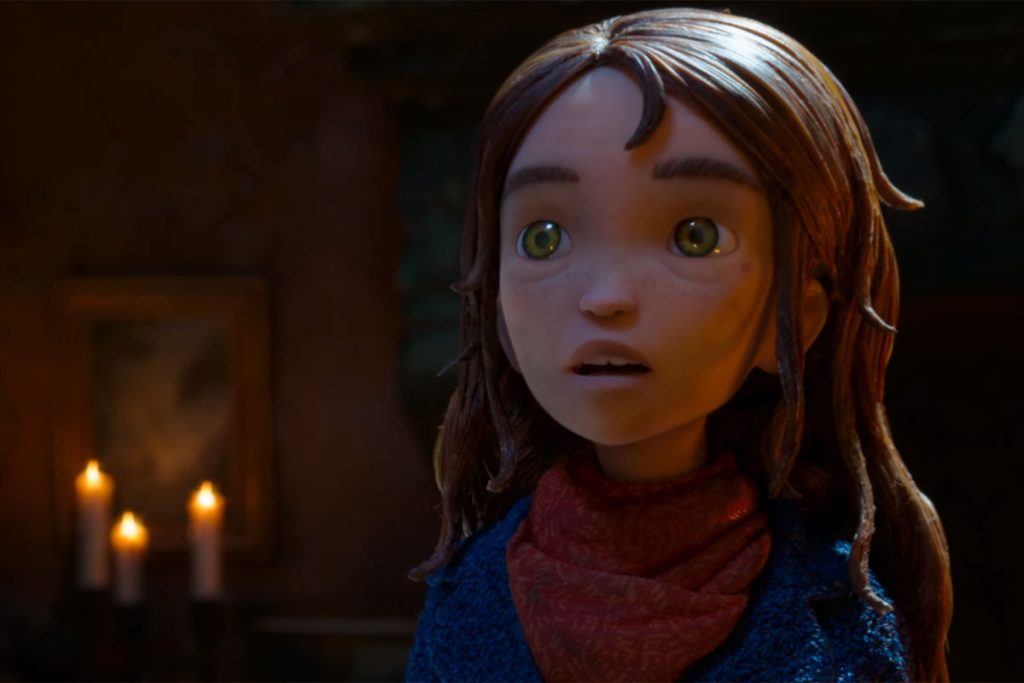
Set on the outskirts of Portland, Oregon, Wildwood follows Prue McKeel (voiced by Peyton Elizabeth Lee), a determined teenager whose ordinary life takes an extraordinary turn when a flock of crows abducts her baby brother. Desperate to rescue him, Prue ventures into the mysterious Impassable Wilderness, a forbidden forest filled with talking animals, warring factions and secrets that threaten the delicate balance of this hidden world. Accompanied by her loyal but somewhat hapless classmate Curtis (Jacob Tremblay), she encounters a colourful collection of characters, including the mysterious Alexandra (Carey Mulligan), as the rescue mission becomes something far greater than either teenager could have imagined. What begins as a desperate search for a missing child soon develops into an epic adventure where courage, friendship and sacrifice may determine the fate of an entire magical kingdom.
Beauty in the Darkness
One thing LAIKA has never shied away from is exploring the darker side of humanity and society. While the studio’s animation continues to amaze, its stories often venture into uncomfortable territory, reminding us that not every animated adventure is designed for the youngest members of the family. Wildwood continues this tradition, delivering a visually extraordinary experience that may leave audiences wondering precisely who this film is meant to be for.
Where Aardman creates charming claymation worlds filled with warmth, whimsy and distinctly British humour, LAIKA seems more comfortable taking audiences into the shadows. Its fantastical worlds are filled with unsettling characters, macabre imagery and an underlying sense that danger is never far away. This is certainly not the bright, reassuring world of a traditional Disney fairy tale.
Instead, Wildwood embraces the darker traditions of fantasy storytelling, appealing to those who prefer a little more of the macabre mixed into their magical adventures. Yet there is undeniable beauty amongst the pain of these woods.
The film draws upon the countercultural atmosphere of Oregon and the American Pacific Northwest, blending the natural environment with the human world in ways that are both imaginative and unsettling. The forests seem to possess a personality of their own, becoming much more than simply a backdrop for the adventure. Every aspect of this world feels deliberately crafted, from the intricate animation to the unusual characters and the complex relationships between humanity and nature. The result is an extraordinary achievement in stop-motion filmmaking.
However, the film’s maturity extends well beyond its visual presentation. Even the humour carries a darker edge, while the depictions of conflict, warfare and evil are surprisingly unapologetic. This is a story willing to acknowledge the uglier aspects of life rather than soften them for younger audiences. At the centre of this unsettling world is Prue McKeel, whose sceptical exterior quietly conceals something far more compelling: hope.
Despite her doubts and the dangers surrounding her, Prue is driven by a determination to save her brother and protect her friend. Her journey becomes a reminder that courage does not necessarily come from unwavering confidence. Sometimes, it emerges from the fragile hope that those we love might still be rescued. This provides a welcome emotional counterbalance to the darkness.
There is something beautiful about a character who questions the world around her yet refuses to surrender the possibility that good can prevail. And perhaps this is where Wildwood is at its strongest.
Beneath the unsettling imagery and complicated fantasy world is a story about love, loyalty and the willingness to venture into dangerous places for the sake of another. Still, I found myself wrestling with one significant question throughout the experience.
Who is this film actually for?
The animation and fantasy adventure might suggest a family audience, yet the mature themes, unsettling imagery and unflinching depictions of evil make this a difficult recommendation for younger viewers. Meanwhile, older audiences may admire the craftsmanship without necessarily being drawn towards a story centred on a young girl’s journey through an enchanted wilderness. It is an unusual dilemma.
There is brilliance here, and the artistry deserves recognition. Yet the very elements that make Wildwood so distinctive may also prevent it from reaching the broader audience it seems to be seeking. This is a compelling, beautifully realised and occasionally disturbing cinematic experience. It may not be a fairy tale for everyone, but for those who appreciate finding beauty within the darker corners of fantasy, Wildwood offers a world unlike almost anything else in contemporary animation.
What Should Parents Know?
Despite its beautiful stop-motion animation and young central characters, Wildwood should not be mistaken for a traditional family adventure.
LAIKA has built a reputation for exploring the darker corners of fantasy, and this film continues that tradition. Parents should be prepared for unsettling imagery, frightening characters, threatening situations and surprisingly mature depictions of warfare, violence and evil. The humour also has a darker edge, while the story explores family separation, fear, sacrifice and the painful consequences of conflict.
The film’s macabre atmosphere and emotional intensity may prove overwhelming for younger or more sensitive viewers. This is a world far removed from the comforting charm of Aardman or the lighter traditions of Disney storytelling.
Nevertheless, there are worthwhile themes of courage, friendship, loyalty and sacrificial love, particularly in Prue’s determination to rescue her brother. These elements could provide meaningful opportunities for families with older children to discuss the importance of hope and standing alongside those we love.
My recommendation: Wildwood is better suited to mature children, teenagers and adults who appreciate darker fantasy adventures. Parents should consider their children’s sensitivity to frightening imagery and violence rather than assuming that animation automatically means family-friendly entertainment.
REEL DIALOGUE: How Far Would You Go to Rescue Someone You Love?
Would you leave the safety of your home, enter an unfamiliar world or risk everything to bring them back? These are the questions at the heart of Wildwood.
When Prue’s younger brother is taken into the mysterious Impassable Wilderness, she faces a choice. She could remain in the safety of the world she knows, accepting that the dangers beyond its borders are simply too great. Instead, she ventures into the unknown, determined to find the person she loves.
There is something deeply moving about this kind of devotion. It reminds us that genuine love is not merely expressed through words or good intentions. Sometimes, love requires courage, personal sacrifice and a willingness to step into uncomfortable or dangerous circumstances for the sake of another.
Jesus spoke of this extraordinary expression of love in John 15:13:
“Greater love has no one than this, that someone lay down his life for his friends.” (ESV)
These words remind us that the greatest expressions of love are often found in what we are willing to give rather than what we hope to receive.
Yet the Christian message takes this idea even further. Throughout the Bible, God is portrayed not as a distant observer of humanity’s struggles but as a loving Father who actively pursues those who are lost.
In Luke 15, Jesus tells the story of a shepherd who leaves ninety-nine sheep to search for the one that has wandered away. The shepherd does not dismiss the missing sheep as an acceptable loss. He goes looking for it, and when he finds it, he carries it home rejoicing. It is a beautiful picture of God’s heart towards humanity.
We may think of ourselves as people searching for meaning, purpose or a way back to God. Yet the extraordinary claim of Christianity is that God has already taken the initiative to seek and rescue us.
Jesus explains His mission in Luke 19:10:
“For the Son of Man came to seek and to save the lost.” (ESV)
This is where the story of rescue becomes something far greater than a heroic adventure. Christians believe that Jesus did not simply enter a dangerous wilderness to save someone He loved. He entered our broken world, took upon Himself the consequences of sin and willingly gave His life so that we might be reconciled to God. The cross reveals just how far God’s love was willing to go.
Of course, loving someone does not always require a dramatic rescue or an extraordinary act of heroism. Sometimes, it means standing beside a family member through a difficult season, forgiving someone who has hurt us, caring for a person who cannot repay our kindness or refusing to abandon someone when life becomes complicated. These acts may never make it onto a cinema screen, but they can reveal the depth of our love just as powerfully.
Wildwood invites us to consider the lengths we would go to for those closest to us. The Christian faith invites us to consider something even more remarkable: the lengths to which God has already gone to rescue us.
The conversation starter: Who in your life needs to experience love through your actions rather than simply your words, and what might it cost you to show them that love?

Reel Dialogue has entered the world of YouVersion: Download the app, dive into the plans, and engage with the Bible in a fresh and exciting way.
Reel Dialogue has entered the world of YouVersion: Download the app, dive into the plans, and engage.


