Star Wars: The Mandalorian and Grogu
Is this the way?


 20 May 2026
  Michael Walsh
 For nearly two decades, Jon Favreau has quietly become one of the most important architects of modern blockbuster cinema. After helping launch the Marvel Cinematic Universe with Iron Man and redefining Disney's live-action remakes with The Jungle Book, Favreau became the creative force who stabilised Star Wars during one of its more turbulent eras.
Following the divisive reception to Star Wars: Episode IX – The Rise of Skywalker in 2019, the galaxy far, far away largely retreated from cinemas and found new life on streaming through shows like The Mandalorian. Now, just under seven years after the last theatrical Star Wars release, The Mandalorian and Grogu finally brings the franchise back to the big screen. The result is an entertaining but safely familiar cinematic continuation of the Disney+ series that retains much of the tone fans love, while raising questions about whether Star Wars will ever evolve beyond nostalgia and comfortable storytelling.
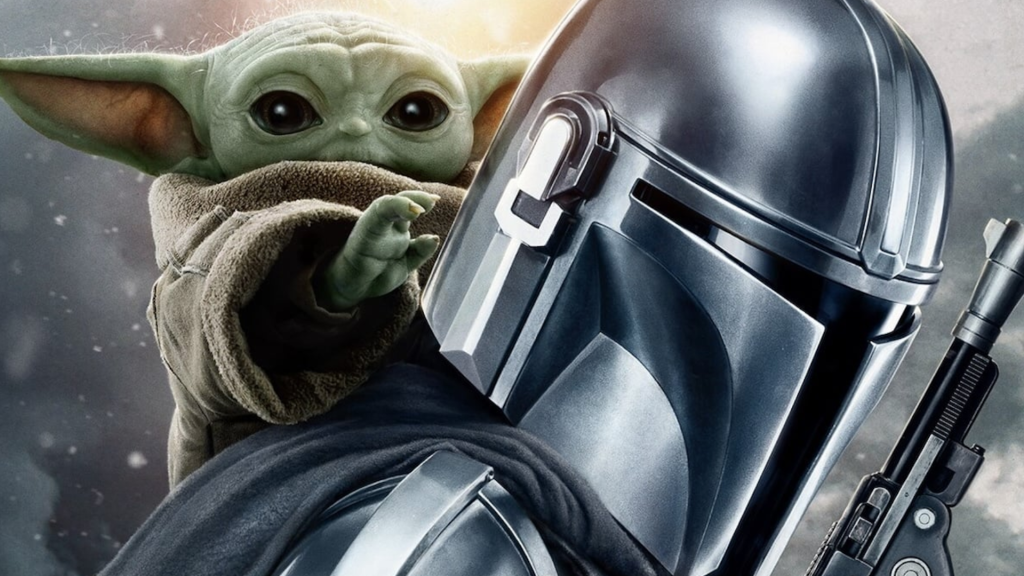
Set after the events of season three of the streaming series, the film follows bounty hunter Din Djarin (Pedro Pascal) and his adopted, Force-sensitive companion Grogu as they navigate the fractured remnants of the Empire. For audiences unfamiliar with the series, Din began his journey as a lone Mandalorian mercenary before becoming the protector and father figure to Grogu (affectionately known by fans as “Baby Yoda”). Across three seasons, the pair battled Imperial warlords, reunited Mandalorian clans, and restored Din’s standing among his people. In this latest adventure, the duo becomes entangled in a dangerous conflict after getting embroiled with the Hutt crime syndicate while trying to track down a wanted Imperial exile. What unfolds is an episodic, planet-hopping space western filled with shootouts, creatures, explosions, and classic Star Wars spectacle.
There is an undeniable joy in simply seeing Star Wars back in cinemas where it belongs. Favreau and longtime collaborator Dave Filoni clearly understand the aesthetic language of the franchise better than almost anyone working today. The film is packed with tactile practical effects, detailed creature work, and seamlessly integrated visual effects that homage the original trilogy’s textured universe. Spaceships feel weighty, swampy planets feel slimy, droids feel mechanical, and the action sequences carry a pulpy energy that recalls why audiences fell in love with George Lucas’s universe in the first place.
Pedro Pascal’s vocal warmth continues to bring an understated resolve to Din Djarin despite spending most of the film hidden beneath his beskar armour. Yet, as to be expected, the centre of attention belongs to Grogu, whose expressive reactions and childlike curiosity continue to endear audiences without descending into pure gimmickry. Their father-son dynamic remains the heart of the story and gives the film genuine emotional grounding. However, and somewhat frustratingly, for a film titled The Mandalorian and Grogu, you might expect the narrative to expand upon Grogu’s backstory and larger significance—which is arguably the franchise’s most compelling unresolved thread. Instead of pushing the saga forward in bold new directions, the film settles for delivering a self-contained, crowd-pleasing adventure that leaves our leads right back where they started.
The result is a movie that feels almost too safe. Beneath the cinematic sheen lies what is simply a retooled fourth season of the streaming show with a larger budget and theatrical polish. The episodic structure often makes the narrative feel more like individual linked adventures rather than a fully developed cinematic arc. While refreshing in its refusal to overload audiences with exposition, the film simultaneously offers surprisingly little character progression or deeper world-building. Newcomers may feel dropped into the middle of an ongoing story with few guide rails, while longtime fans may be left wanting more substantial advancement for the wider mythology.
Still, perhaps there is value in that simplicity. At a time when many blockbusters feel bloated, cynical, or overly reliant on franchise complexity to set up sequels, The Mandalorian and Grogu succeeds by remembering that sometimes what works best is an earnest, self-contained story. It may not redefine the franchise, but it delivers an entertaining, well-crafted blockbuster adventure that understands exactly what casual fans want to see on the big screen.
REEL DIALOGUE: Knowing the Way
One of the most memorable lines associated with The Mandalorian is the repeated phrase: “This is the way.” For the Mandalorians, this line represents identity, purpose, and commitment to a code larger than themselves. Din Djarin follows “the way” even when it costs him comfort, safety, and his reputation.
Throughout the Bible, humanity is also presented with a choice of paths. Scripture repeatedly asks whether we will choose to follow our own way or God’s way. Yet, unlike the uncertainty, confusion, and shifting morality often found in the world around us, Jesus makes an astonishingly exclusive and comforting claim about Himself. He does not merely point toward a helpful path; He declares that He is the way itself.
In a culture constantly searching for meaning, identity, and a place to belong, the Gospel reminds us that the ultimate path home is not found in a creed, a political tribe, or a philosophy, but in a person. Jesus invites people not simply to admire Him from afar as someone who lived long ago in a place far, far away, but to follow Him fully and personally in the here and now.
Check it out for yourself today: Jesus’ words in John 14:6:
“I am the way and the truth and the life. No one comes to the Father except through me.”

Reel Dialogue has entered the world of YouVersion: Download the app, dive into the plans, and engage with the Bible in a fresh and exciting way.
Reel Dialogue has entered the world of YouVersion: Download the app, dive into the plans, and engage.

About Michael Walsh


More Films like this
View All Digger
One of the most brilliantly constructed films I have absolutely no desire to watch again