The Stranger
If life feels empty on its own terms, where might true meaning be found?


 4 May 2026
  Grace Huang
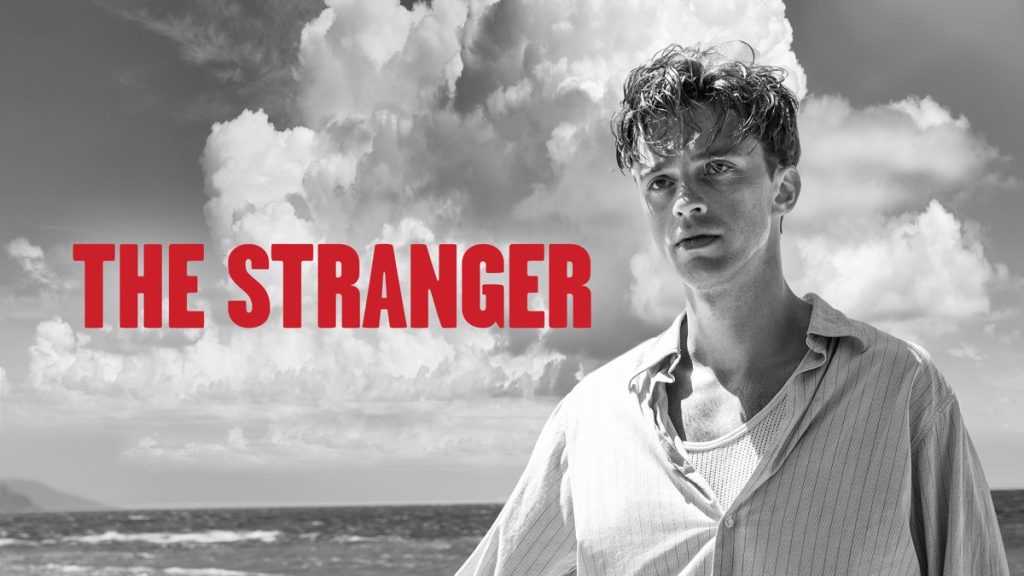
 The Stranger (L’Étranger) is a French-language adaptation of Albert Camus’ classic novel, exploring one man’s quiet detachment from life and the unsettling consequences that follow. It centres on Meursault (Benjamin Voisin), a man who drifts through existence with little emotional engagement—until a sudden act of violence brings his life under intense scrutiny.
Set in French Algeria during the 1930s, the film introduces Meursault as a young Frenchman who appears emotionally distant and largely indifferent to the world around him. His response to his mother’s death is muted; he does not grieve in the expected ways and quickly resumes life, including beginning a casual relationship with Marie. When she raises the idea of marriage, he agrees—not out of conviction, but simply because it seems like the natural thing to do. This same detachment extends to the suffering of others, whether it be his neighbour’s abused dog or the violence inflicted by a friend on his mistress. For Meursault, life simply unfolds as it is.
However, everything shifts during a day at the beach, where he unexpectedly kills a man. What follows is less a trial about the crime itself and more an indictment of his character. His lack of visible grief, particularly at his mother’s funeral, becomes central to the case against him—suggesting that society finds his emotional indifference more troubling than the act he has committed.
Visually striking in its use of black and white, the film captures the starkness of Meursault’s inner world. Its slow pace and restrained emotional tone mirror the existential themes at its core—questions of meaning, identity, justice, and the expectations society places on individuals. The result is a confronting viewing experience that invites reflection rather than resolution.
Like Camus’ novel, the film raises difficult questions about authenticity and societal norms. Why should Meursault cry if he does not feel grief? Why should he conform to expectations around love, morality, or empathy? These questions linger, challenging viewers to consider not only what is, but what ought to be.
REEL DIALOGUE: What is life about—and how do we know what ought to be?
In a culture that often promotes “being true to yourself,” Meursault could be seen as an extreme example of personal authenticity. Yet, the film leaves audiences unsettled—caught between sympathy for his honesty and discomfort at his apathy.
While those who judge Meursault do not fully understand him, they do reflect a deeper intuition: that something is not right about a life without care, compassion, or remorse.
The Stranger raises profound questions about the meaning of life but offers few answers, leaving a sense of restlessness. Interestingly, this same tension is explored in the Bible—particularly in Ecclesiastes, where the search for meaning apart from God is described as “a chasing after the wind.”
“I have seen all the things that are done under the sun; all of them are meaningless, a chasing after the wind.” — Ecclesiastes 1:14
“Yet when I surveyed all that my hands had done… everything was meaningless, a chasing after the wind.” — Ecclesiastes 2:11
The difference, however, is that the Bible does not leave us without hope. It points beyond the emptiness of life lived without purpose and offers a foundation for understanding not only what is—but what ought to be.
Perhaps the question to consider is this: if life feels empty on its own terms, where might true meaning be found?

Reel Dialogue has entered the world of YouVersion: Download the app, dive into the plans, and engage with the Bible in a fresh and exciting way.
Reel Dialogue has entered the world of YouVersion: Download the app, dive into the plans, and engage.

About Grace Huang


More Films like this
View All