Wolfram
The brutal realities of Australia's past


 22 Apr 2026
  Russ Matthews
 Director Warwick Thornton has built a powerful career telling Indigenous Australian stories, from the modern tragedy of Samson & Delilah to the historical depth of The New Boy. Sweet Country (2017) offered a confronting glimpse into Australia’s past, and with Wolfram, Thornton returns to similarly challenging territory.
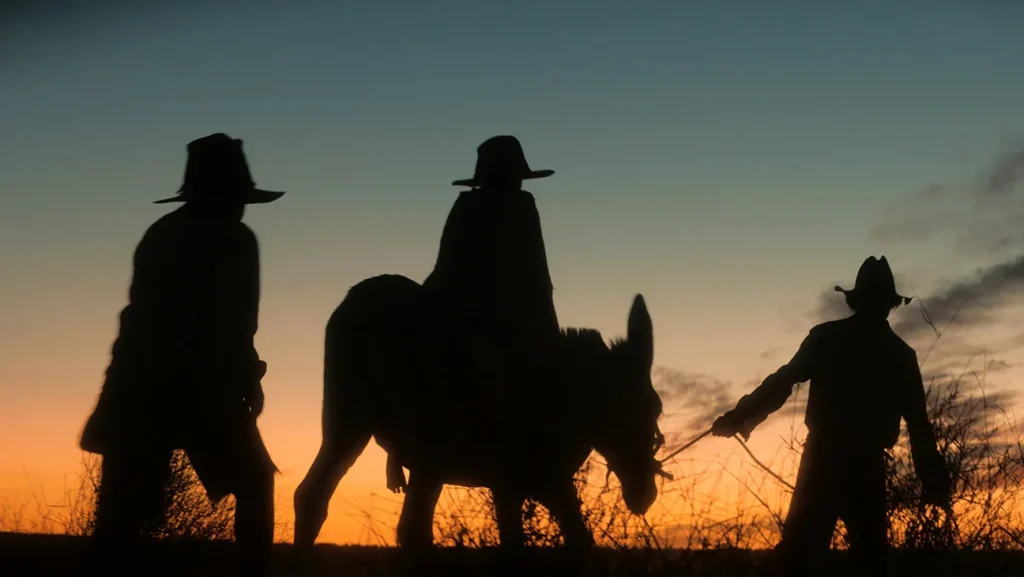
Set in the Northern Territory in 1932, the film portrays life in the Hatches Creek wolfram mining fields—a harsh, dust-covered, fly-infested environment. Within this setting, Aboriginal children are forcibly taken from their families and made to work in the mines. Two young boys struggle to survive the brutal conditions as they long to return to their mother, Pansy (Deborah Mailman). Meanwhile, she searches desperately across the countryside, while Philomac (Pedrea Jackson) attempts to guide the boys home, all while evading two men intent on capturing them.
To sit down and experience a Warwick Thornton film is to enter into something deeply confronting. His work does not offer easy viewing, but rather a raw and often painful reflection on Australia’s history. As both director and cinematographer, Thornton immerses audiences in these harsh realities, creating a visceral journey that serves as both remembrance and warning. His storytelling is rarely subtle; instead, it strips back the layers of history, exposing wounds that still shape the nation today.
The cast fully commits to the emotional weight of the story. Grief, fear, and anger are not simply suggested—they are felt in every frame. Surrounded by red dust, relentless heat, and physical exhaustion, Wolfram becomes an overwhelming cinematic experience. It is a film that lingers, leaving audiences not only moved but unsettled, as they grapple with the depth of what has been portrayed.
REEL DIALOGUE: The Bible’s perspective on racism
Wolfram confronts issues that have shaped both Australia and the wider world—racial prejudice and discrimination. These are not merely social or political concerns; they reflect a deeper brokenness within humanity.
The Bible presents a clear and consistent message: all people are created with equal value and dignity. Racism stands in direct opposition to this truth. The hatred and injustice depicted in this film are not reflective of the life and teachings of Jesus. His message—and His sacrifice—was for all people, regardless of race, background, or status.
Scripture reminds us that every person is made in God’s image and worthy of respect and love. Followers of Jesus are called to reflect this truth, rejecting prejudice and embracing unity.
“There is neither Jew nor Gentile… for you are all one in Christ Jesus.” — Galatians 3:28
The challenge for us is not only to acknowledge the wrongs of the past, but to live differently in the present—treating all people with the dignity and compassion they deserve.

Reel Dialogue has entered the world of YouVersion: Download the app, dive into the plans, and engage with the Bible in a fresh and exciting way.
Reel Dialogue has entered the world of YouVersion: Download the app, dive into the plans, and engage.

About Russ Matthews


More Films like this
View All