Backrooms
What is reality?


 28 May 2026
  Russ Matthews
 Some have described Backrooms as a psychological nightmare—a cinematic depiction of hell and the endless torment it might contain. Yet, what unfolds on screen is less a terrifying descent into darkness and more a perplexing exploration into why films like this are made at all, and who exactly they are intended to entertain.
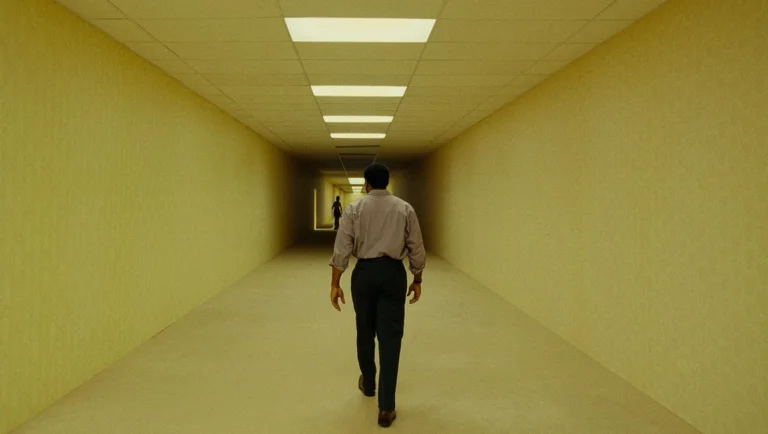
Inspired by Kane Parsons’ cult YouTube anthology series, Backrooms attempts to translate internet horror into a feature-length cinematic experience. The story follows Clark (Chiwetel Ejiofor), the weary manager of a struggling furniture store in 1990. Wrestling with the collapse of his marriage and dissatisfaction with his life, Clark begins seeing psychiatrist Dr Mary Kline (Renate Reinsve). However, his world changes when he discovers a mysterious doorway hidden beneath the store, leading him into an endless maze of unsettling rooms and alternate spaces seemingly disconnected from reality. As Clark descends further into this unknown universe, Mary is eventually drawn into the mystery herself as both attempt to understand what this place is—and who or what may be controlling it.
Director Kane Parsons deserves credit for bringing his distinctive online horror aesthetic to the big screen. The film certainly creates an atmosphere of unease, relying heavily on transitional spaces, unnatural silence, and surreal environments to unsettle audiences. Yet, despite the visual ambition, the story itself struggles to provide anything emotionally or narratively satisfying. What begins as an intriguing psychological mystery gradually becomes an exhausting maze that appears to go nowhere meaningful.
There is little doubt that some modern critics will champion the film for its abstract themes and unconventional style. However, general audiences may leave the cinema questioning not only what they watched, but why they watched it at all. The film often feels more interested in creating discomfort and confusion than telling a coherent story. Rather than generating genuine horror, it tends to provoke frustration and emotional detachment.
Chiwetel Ejiofor and Renate Reinsve commit fully to the material and bring credibility to the increasingly bizarre narrative. Unfortunately, their strong performances become trapped within a screenplay that mistakes ambiguity for depth. Like the endless corridors it portrays, Backrooms continually promises discovery but rarely delivers meaningful payoff.
Visually, the film remains impressive. The production design, unsettling environments, and dreamlike cinematography create moments of genuine creepiness. Yet, style alone cannot sustain the weight of a feature film. In the end, Backrooms may attract viewers curious about its internet origins and strange aesthetic, but many may leave feeling lost within its labyrinth long after the credits roll.
REEL DIALOGUE: The spiritual realm
“Do not be conformed to this world, but be transformed by the renewal of your mind…”
That verse may sound like something spoken within the strange world of Backrooms, yet it comes directly from the pages of the Bible. Romans 12 to be exact.
Films dealing with alternate realities, endless dimensions, and unseen forces naturally raise questions about the spiritual side of life. While Backrooms appears to attempt to provide imagery of a hell-like existence or spiritual torment, its depiction differs significantly from the Bible’s understanding of eternity and the spiritual realm.
Even so, stories like this can create valuable opportunities for deeper conversations. Humanity has always wrestled with questions about what exists beyond the physical world, and the Bible does not shy away from these realities. Instead, Scripture offers clarity, hope, and purpose in contrast to the confusion and despair portrayed within films like Backrooms.
Like Clark and Mary searching endlessly for answers, many people today are searching for meaning, truth, and hope in a confusing world. The Bible points people not toward endless wandering, but toward a God who desires to be known.
“For we do not wrestle against flesh and blood, but against the rulers, against the authorities, against the cosmic powers over this present darkness…” — Ephesians 6:12
Perhaps the question worth considering is this: when we confront the mysteries and fears of life, where are we ultimately looking for answers?

Reel Dialogue has entered the world of YouVersion: Download the app, dive into the plans, and engage with the Bible in a fresh and exciting way.
Reel Dialogue has entered the world of YouVersion: Download the app, dive into the plans, and engage.

About Russ Matthews


More Films like this
View All