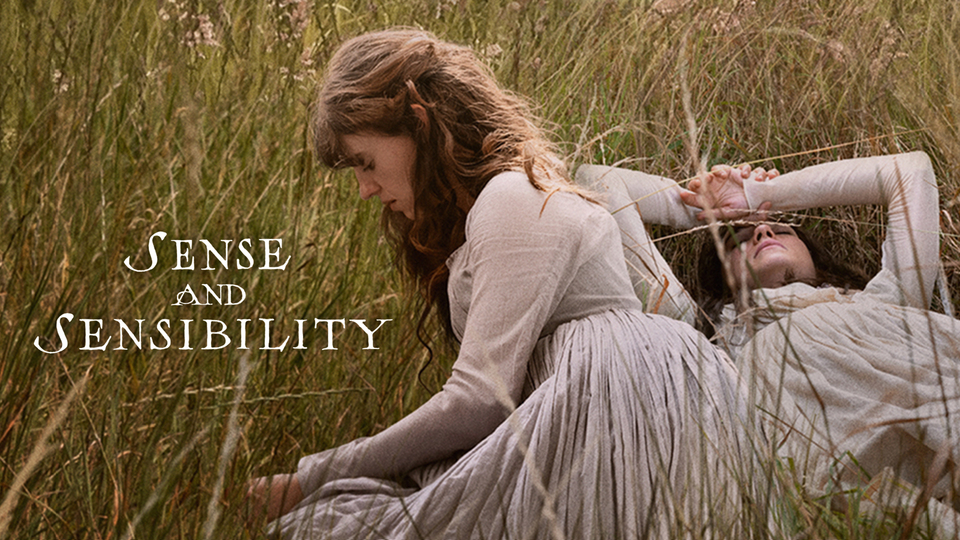
Sense and Sensibility
A timeless story of love, restraint and the wisdom of waiting


 16 Oct 2026
  Russ Matthews
 There are some films that have an almost impossible task before the opening credits even begin. The latest adaptation of Jane Austen's Sense and Sensibility is one of them.
For many audiences, particularly Austen enthusiasts, Ang Lee's 1995 Academy Award-winning film remains the definitive cinematic interpretation of this beloved novel. Its exceptional cast, beautiful storytelling and emotional resonance have ensured that it has endured for more than three decades.
Any new adaptation will inevitably suffer by comparison.
Every character will be measured against their predecessor, every performance scrutinised and every creative decision weighed against a film that has become a classic in its own right. Yet perhaps the wisest approach is to put the 1995 version aside and allow this new film to breathe.
After all, Jane Austen’s novel existed long before Ang Lee and Emma Thompson brought it to the screen, and there is certainly room for another filmmaker to explore its enduring themes of love, family, disappointment and the complicated relationship between reason and emotion. Thankfully, this latest Sense and Sensibility offers enough to justify its existence.
It may not replace the beloved original for Austen devotees, but it manages something increasingly rare in contemporary adaptations of classic literature: it introduces a fresh cinematic perspective without sacrificing the heart of its source material.
Two sisters, two approaches to love
At the centre of Austen’s story are the Dashwood sisters, Elinor (Daisy Edgar-Jones) and Marianne (Esme Creed-Miles), two young women navigating the complicated social expectations of love, marriage and financial security in nineteenth-century England. Following a dramatic change in their family’s circumstances, the sisters find themselves confronting an uncertain future in a society where a woman’s prospects are often determined as much by wealth and position as by affection. Elinor approaches life with restraint, responsibility and a determination to consider the consequences of her decisions. Marianne, by contrast, is driven by passion, romantic idealism and an unwillingness to conceal her feelings.
Neither approach is without its weaknesses.
Elinor’s reserve can conceal the depth of her suffering, while Marianne’s emotional openness leaves her vulnerable to disappointment and heartbreak. This contrast is what makes Austen’s story so enduring. The sisters are not merely competing representations of sensible and emotional behaviour. They are recognisably human characters who must discover that love requires something more than either rigid self-control or unrestrained passion. Their journeys remind us that the heart and mind are not always comfortable companions. And it is within this timeless tension that the new film finds its strongest footing.
Daisy Edgar-Jones gives the film its heart
The standout performance belongs to Daisy Edgar-Jones as Elinor Dashwood. There is a quiet strength to Edgar-Jones that makes her particularly suited to the character. She understands that Elinor’s emotional restraint is not an absence of feeling, but a constant effort to manage emotions that threaten to overwhelm her. Much of the performance rests in the subtle moments: a glance, a pause or a carefully measured response when the audience understands that far more is happening beneath the surface. This is where Edgar-Jones excels.
Rather than attempting to replicate Emma Thompson’s memorable portrayal in the 1995 film, she brings her own interpretation to Elinor, giving the character a vulnerability that feels authentic and accessible to modern audiences. George MacKay is equally effective as Edward Ferrars. His understated approach complements Edgar-Jones beautifully, allowing their relationship to develop through the awkwardness, uncertainty and unspoken affection that make Austen’s romantic relationships so compelling. There is a genuine tenderness to their interactions.
In a cinematic landscape where romantic attraction is frequently reduced to physical chemistry and immediate gratification, the restrained relationship between Elinor and Edward feels remarkably refreshing. Their story is not simply about two people discovering their feelings for one another, but about the obstacles that prevent those feelings from being expressed and the moral responsibilities that complicate their choices. Edgar-Jones and MacKay understand these subtleties, and their performances provide the emotional foundation for the film.
A beautiful balance between art and accessibility
Beyond the performances, one of the film’s greatest achievements is its visual presentation. There is an almost arthouse quality to the cinematography and overall production style. The framing, natural beauty and carefully considered imagery create an atmosphere that feels both intimate and expansive.Yet the film never becomes so consumed by its artistic ambitions that it forgets to engage the audience.
This is a delicate balance.
Period dramas can sometimes become overly reverential towards their source material, creating beautiful but emotionally distant productions. Others attempt to reinvent classic literature so aggressively that the original story becomes almost unrecognisable. This adaptation finds a welcome middle ground. It has a contemporary cinematic sensibility without feeling compelled to modernise Austen’s characters, language or social world beyond recognition. That distinction matters.
After the recent interpretations of Wuthering Heights and the deliberately modernised approach of Bridgerton, it is refreshing to encounter a production that trusts the strength of its original material. Not every classic needs contemporary attitudes, modern musical choices or exaggerated romantic encounters imposed upon it to remain relevant. Sometimes the wisest creative decision is to recognise that the original author understood human nature remarkably well. Austen certainly did.
Her observations about pride, romantic expectation, social pressure and the consequences of our decisions remain as relevant today as they were when she first wrote them. This film respects that reality. Rather than attempting to make Austen fashionable, it allows her story to demonstrate why it has never truly gone out of fashion.
When the characters don’t quite connect
Unfortunately, not every performance achieves the same level of authenticity. Esme Creed-Miles, as Marianne Dashwood, proves to be one of the weaker elements of the production. Marianne is meant to be passionate, impulsive and emotionally expressive, particularly when contrasted with her more reserved sister. Yet Creed-Miles occasionally feels as though she has wandered in from a different cinematic era.
There is something about her interpretation that doesn’t always sit comfortably alongside the more naturalistic performances surrounding her. While the contrast between the sisters is essential to Austen’s narrative, the difference in acting styles sometimes becomes a distraction rather than a meaningful character distinction. Herbert Nordrum also struggles to convince in the romantic role he is required to portray.
There is certainly room for restraint and awkwardness within Austen’s world, particularly given the social expectations governing relationships. However, Nordrum’s performance is at times so wooden that it becomes difficult to understand the romantic appeal his character is intended to possess. This creates a challenge for a story that depends upon the audience appreciating the emotional choices and attachments of its central characters. The contrast is particularly noticeable when placed alongside the chemistry between Edgar-Jones and MacKay. These weaknesses do not derail the film, but they prevent it from achieving the emotional consistency that made Ang Lee’s adaptation so memorable.
Does the world need another Sense and Sensibility?
This is probably the question many Austen fans will ask. And it is a reasonable one.
The 1995 film remains an extraordinary achievement, with Ang Lee’s direction, Emma Thompson’s screenplay and its remarkable ensemble creating something that has stood the test of time. For those who grew up with that interpretation, this new version may never quite measure up. Yet cinema has always returned to great literature.
Shakespeare has been interpreted countless times, Dickens continues to find new audiences and Austen’s novels have inspired generations of filmmakers. The existence of an excellent adaptation should not prevent another generation from discovering the same story through a different creative lens. What matters is whether the new production has something worthwhile to offer.
In this case, the answer is yes.
Daisy Edgar-Jones and George MacKay provide a compelling emotional centre, the filmmaking is beautiful, and the creative team has resisted the temptation to sacrifice Austen’s story in pursuit of modern relevance. There are weaknesses in the supporting performances, and the film is unlikely to displace its celebrated predecessor. Nevertheless, it is a thoughtful and visually engaging interpretation of a classic that deserves to be rediscovered.
For Austen tragics, Ang Lee’s version will probably prevail. For a new generation, however, this Sense and Sensibility may be the introduction that encourages them to discover the remarkable literary world of Jane Austen. And that alone makes it a worthwhile cinematic endeavour.
REEL DIALOGUE: Can we wait for the best options in life for ourselves and others?
One of the fascinating aspects of Sense and Sensibility is that it explores something we all experience, regardless of the century in which we live. The tension between what we want and what we know may be right. Throughout Austen’s story, the characters must navigate their romantic desires, personal expectations and responsibilities towards others.
Some pursue their passions without adequately considering the consequences, while others suppress their feelings because they believe duty must take precedence over personal happiness. Yet neither extreme necessarily leads to a satisfying outcome.
This raises a question that remains remarkably relevant today:
Can we wait for the best options in life, not merely for ourselves, but for everyone involved?
We live in a culture that frequently encourages immediate satisfaction. If we want something, we are told to pursue it. If a relationship makes us happy, we should embrace it. If circumstances become difficult, perhaps we should simply move on to something better.
But what happens when our desires conflict with our responsibilities? What if getting what we want comes at the expense of someone else? And could waiting, rather than immediately acting, sometimes be the most loving decision we make?
The Bible speaks directly to this tension.
In 1 Corinthians 13:4–5, the Apostle Paul writes:
“Love is patient and kind; love does not envy or boast; it is not arrogant or rude. It does not insist on its own way; it is not irritable or resentful.” (ESV)
These words challenge many of our contemporary assumptions about romance. Love is not merely an emotion to be experienced or a desire to be fulfilled. It is also a commitment to consider the needs, wellbeing and dignity of another person.
That often requires patience. Sometimes it requires sacrifice.
And occasionally it means accepting that something we deeply desire may not be the right thing for us, at least not at that moment. This is not an argument for passivity or for remaining in harmful circumstances. Nor does it mean that every disappointment will eventually lead to the outcome we hoped for.
Rather, it is an invitation to recognise that genuine love involves more than satisfying our immediate desires.
Proverbs 19:2 offers another valuable perspective:
“Desire without knowledge is not good, and whoever makes haste with his feet misses his way.” (ESV)
There is wisdom in considering the consequences of our decisions before allowing our emotions to determine our direction. Of course, waiting is rarely easy. We may fear missing an opportunity, losing someone we love or discovering that the future does not unfold as we imagined. Yet the Christian faith encourages us to trust that wisdom, patience and love are not obstacles to a fulfilling life. They are essential qualities for living well.
Philippians 2:3–4 reminds believers to look beyond their own interests and consider the interests of others.
That principle is particularly important when it comes to relationships. The question is not simply, “What will make me happy?” It is also, “What is loving, honourable and wise for everyone affected by my decision?” Austen understood that our emotions are powerful, but they do not always provide reliable guidance.
Her characters must learn that passion without wisdom can be destructive, while responsibility without compassion can become equally damaging. Perhaps this is why Sense and Sensibility continues to resonate more than two centuries after its publication.
It reminds us that the best relationships are not necessarily those that begin with the strongest emotions, but those shaped by patience, integrity, sacrifice and genuine concern for others.
The conversation starter: When making life’s most important decisions, are we willing to wait for what is right, even when what we want is immediately within reach?

Reel Dialogue has entered the world of YouVersion: Download the app, dive into the plans, and engage with the Bible in a fresh and exciting way.
Reel Dialogue has entered the world of YouVersion: Download the app, dive into the plans, and engage.

About Russ Matthews


More Films like this
View All