Tuner
Striking the right chord


 4 Jun 2026
  Michael Walsh
 There is something refreshing about seeing a filmmaker step outside the genre that made their name and still retain their artistic identity. Canadian director Daniel Roher first gained widespread recognition through documentaries, particularly his Academy Award-winning Navalny, where his observational style, patience, and emotional restraint allowed real-life tension to unfold naturally. With Tuner, Roher makes the leap into narrative filmmaking, and remarkably, he loses none of that grounded human realism. Instead, he channels it into a tightly wound thriller filled with music, longing, and moral ambiguity.
More importantly, Tuner feels like the kind of film cinemas desperately need more of. Mid-budget adult dramas that are driven by character rather than spectacle have become increasingly rare in multiplexes dominated by franchises and nostalgia-driven intellectual property. But a film like Tuner reminds audiences why these stories matter. It is sophisticated without being inaccessible, thrilling without becoming hollow, and emotional without collapsing into sentimentality. It trusts viewers to sit in tension, listen carefully, and appreciate quiet character moments just as much as intense thrills. Combined with a stellar sound design and a magnetic lead performance from Leo Woodall, Tuner becomes the sort of cinematic experience best enjoyed in a packed auditorium with the speakers turned all the way up.
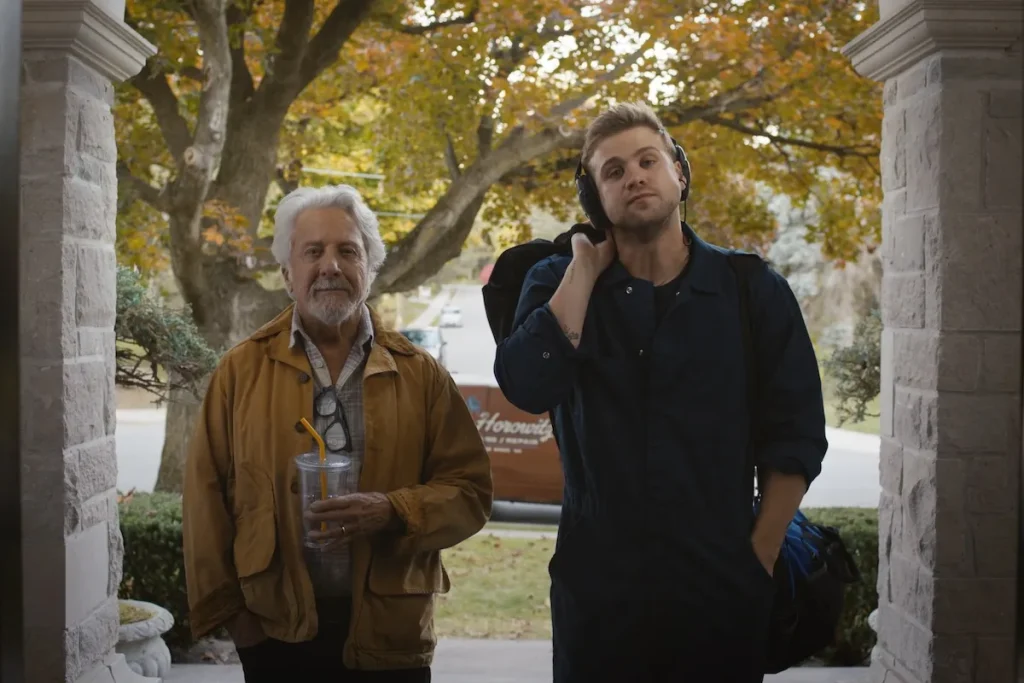
Niki (Leo Woodall) is a gifted piano tuner managing a rare auditory condition that heightens his sensitivity to sound. Desperate for money after his mentor Harry (Dustin Hoffman) is hospitalised, he becomes entangled in a dangerous criminal operation involving safecracking, where his extraordinary hearing makes him invaluable. Along the way, he develops a tender connection with jazz pianist Ruthie (Havana Rose Liu), whose warmth and emotional honesty begin to draw him away from the chaos surrounding him. As Niki balances romance, crime, and the overwhelming noise of the world around him, he must decide what kind of harmony he truly wants his life to reflect.
Rhythmic, romantic, and resonant, this is a wonderfully high-strung thriller that lands its high notes with confidence, delivering a cleverly composed crime drama balancing compassion and opportunism with remarkable precision. At the centre of it all is Leo Woodall, delivering what may well be a career-defining performance. Niki could easily have become a stereotypical reluctant criminal, but Woodall gives him vulnerability and restraint that make every decision feel painfully human. His auditory condition is not treated like a gimmick or superhero ability. Instead, the film carefully immerses the audience into his sensory experience. Every sharp clink, muffled conversation, or distorted vibration becomes overwhelming. Woodall sells every moment physically—twitching, pausing, recalibrating—as though he is constantly trying to retune himself to the world around him.
Equally compelling is the chemistry between Woodall and Havana Rose Liu as Ruthie. Their relationship develops with patience and authenticity, moving from awkward encounters to genuine emotional dependence. Ruthie is not simply a romantic subplot; rather, she represents the possibility of emotional harmony in a life increasingly consumed by chaos. Their scenes together are flirtatious yet deeply resonant because the performances feel honest and lived-in.
Technically, Tuner is extraordinary. The editing is sharp and propulsive, moving seamlessly between tense heist sequences and intimate musical performances. But the true standout is the sound design. Few recent films have used audio so purposefully. Musical performances flow beautifully before being interrupted by sudden sonic distortions that jolt both Niki and the audience. The sound mix becomes storytelling itself, reinforcing the film’s themes of balance, dissonance, and emotional overload.
What makes Tuner truly special is its tonal control. Roher confidently balances romance, crime, drama, and music without allowing any single element to overpower the others. Like a carefully arranged symphony, every subplot and emotional beat complements the next. The result is a deeply satisfying, mature, and intelligent thriller that lingers long after the credits roll.
Reel Dialogue: Finding harmony in the chaos
As Niki finishes tuning Ruthie’s piano, she remarks that it is finally perfect. Niki calmly responds that tuners do not use “the p-word” because nothing is ever truly perfect. For him, tuning a piano is about creating harmony out of chaos and learning to live with imperfection.
That idea quietly becomes the emotional and spiritual centre of Tuner. Every character in the film is flawed, wounded, and slightly out of tune. Niki longs for control but continually makes destructive decisions, and the music itself contains tension and dissonance before resolution arrives.
Living out the Gospel is ultimately about restoration rather than flawless performance. God does not wait for humanity to become perfectly tuned before offering grace. Instead, through Jesus, He brings reconciliation and harmony into lives filled with noise, guilt, and brokenness. Much like a piano tuner patiently adjusting each string, God works within imperfect people to create something beautiful again.
Romans 3:23: “For all have sinned and fall short of the glory of God.”

Reel Dialogue has entered the world of YouVersion: Download the app, dive into the plans, and engage with the Bible in a fresh and exciting way.
Reel Dialogue has entered the world of YouVersion: Download the app, dive into the plans, and engage.

About Michael Walsh


More Films like this
View All 