The Death of Robin Hood
More Logan than The Adventures of Robin Hood


 11 Jun 2026
  Russ Matthews
 Legends are often more mythical than historical. They rely on the stories that shape them into heroes in the minds of those who place their hope in them. Robin Hood is one such figure. Though fictional, he has inspired songs, stories and countless film adaptations over the centuries. Most portray him as a champion of the people, standing against corruption and injustice. But what if Robin Hood was simply a flawed man, shaped by violence and burdened by the weight of his own reputation?
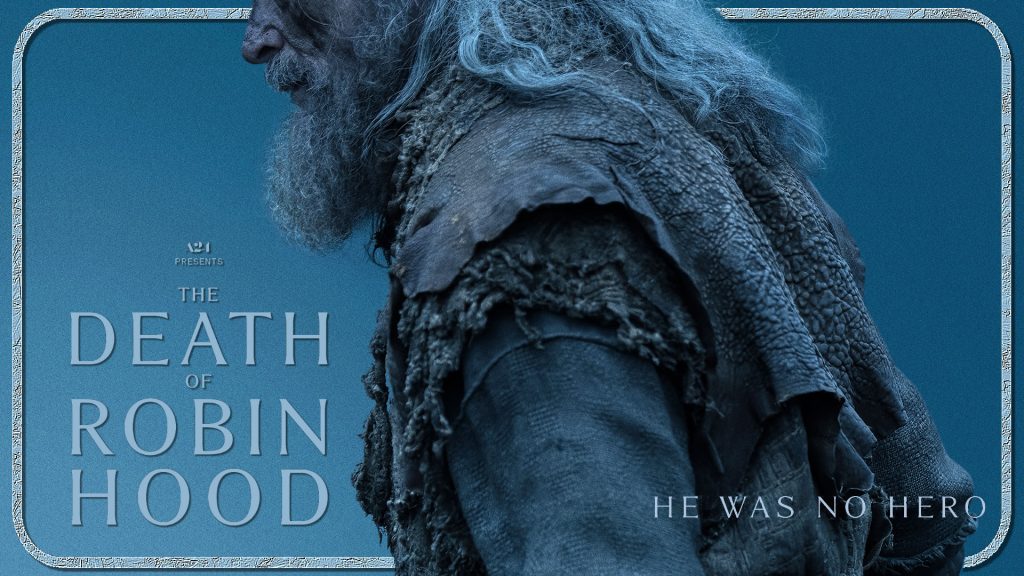
Drawing inspiration from a 17th-century ballad, The Death of Robin Hood attempts to answer that question. Robin Hood (Hugh Jackman) now lives a scarred and isolated existence on the English moors. His days of heroism are long behind him when he is visited by his former companion Little John (Bill Skarsgård), now living under the name Edward. Desperate to reclaim his wife, family and land, Edward seeks Robin’s help. Reluctantly, Robin agrees to join him in what appears to be a noble cause. Instead, the mission descends into tragedy, leaving Robin gravely wounded and fighting for his life. His fate ultimately rests in the hands of a mysterious healer, Sister Brigid (Jodie Comer), who forces him to confront not only his physical wounds but whether he still has the will to live.
Writer-director Michael Sarnoski (Pig) presents a version of Robin Hood that feels far closer to Hugh Jackman’s weary Logan than Errol Flynn’s swashbuckling hero from The Adventures of Robin Hood. This ageing outlaw inhabits a bleak world defined by violence, bloodshed and fractured faith. Haunted by years of conflict and pursued by those seeking vengeance for his crimes, Robin has little interest in the heroic myths that have grown around his name. The legend has become a burden, crushing the spirit of the man beneath it.
Jackman delivers a compelling performance, capturing both the physical toll and emotional exhaustion of a man nearing the end of his journey. Jodie Comer provides a strong counterbalance as Sister Brigid, bringing compassion and mystery to the story. Some of the film’s most affecting moments, however, come through supporting performances from Murray Bartlett (The White Lotus) as a masked leper and Faith Delaney as the young Margaret. Both characters introduce themes of innocence, redemption and grace that briefly illuminate an otherwise sombre narrative.
Despite these brief moments of hope, the film rarely strays from the dark path promised by its title. Sarnoski strips away much of the romance and adventure traditionally associated with Robin Hood, replacing it with a gritty examination of mortality, regret and belief. The mud, blood and brutality of the era are ever-present as the story wrestles with questions of faith, death and the human condition. In doing so, it removes much of the majesty surrounding the legend and presents a deeply human, and often confronting, portrait of its central figure. Ultimately, The Death of Robin Hood is less interested in celebrating a hero than exploring what remains when the stories fade and a man is left to face himself.
Parents should also be aware that this is not a family-friendly Robin Hood adventure. Graphic violence, disturbing imagery and mature themes make this a film best suited to older teenagers and adults.
REEL DIALOGUE: Living up to your legend
Robin Hood has become a legendary figure whose reputation has endured for generations. Yet The Death of Robin Hood focuses less on the legend and more on the man behind it. It explores the burden of a legacy that Robin neither fully embraces nor believes he deserves.
Many people understand that tension. We often spend our lives trying to build a reputation, establish our identity or prove our worth to others. Over time, carrying those expectations can become exhausting. The question remains: is there a hero truly worth following?
The Bible records the lives of many great leaders, from Saul to David and Solomon. Yet none of these men were given the title “King of Kings.” That designation belongs to Jesus alone. Unlike Robin Hood, whose legend became disconnected from the man himself, Jesus fully understood his identity, purpose and place in history.
The Apostle Paul offers an extraordinary insight when writing to the believers in Rome:
“Now if we are children, then we are heirs—heirs of God and co-heirs with Christ, if indeed we share in his sufferings in order that we may also share in his glory.” – Romans 8:17
This passage invites us to consider two profound truths. First, Jesus is more than a historical figure or inspiring example; he is the true King who is worthy of our trust and devotion. Second, those who place their faith in him are invited into God’s family as co-heirs with Christ.
Unlike the fragile reputations we build for ourselves, our identity in Christ is not based on legend, achievement or public opinion. It is grounded in the promises of God and secured by the work of the one true King.

Reel Dialogue has entered the world of YouVersion: Download the app, dive into the plans, and engage with the Bible in a fresh and exciting way.
Reel Dialogue has entered the world of YouVersion: Download the app, dive into the plans, and engage.


