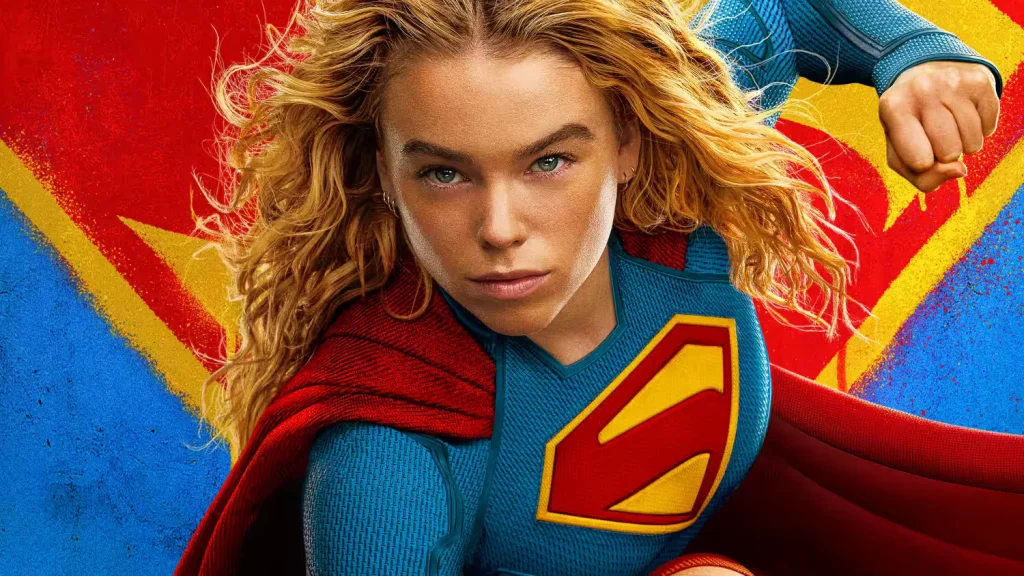
Supergirl
Struggling to Fly Out of Superman's Shadow


 2 Jul 2026
  Russ Matthews
 Zor-El finally steps into the spotlight. What follows is not another tale of a polished superhero discovering her powers, but a cosmic adventure about loss, revenge, anger, and the search for purpose in a universe that has already taken far too much from her.
Audiences were first introduced to Supergirl (Milly Alcock) in the closing moments of Superman (2025) as Clark Kent’s (David Corenswet) seemingly wayward cousin—a young woman who appeared more interested in recovering her missing dog than living up to her family’s heroic legacy. Supergirl pulls back the curtain on Kara Zor-El’s story, revealing a life that differs dramatically from that of her famous relative. While Superman’s journey has been shaped by hope and belonging on Earth, Kara carries the weight of a far more traumatic past, one that continues to influence every decision she makes.
As she celebrates her twenty-third birthday, Kara embarks on a journey across the galaxy with her loyal companion, Krypto. Along the way she encounters the young Ruthye Marye Knoll (Eve Ridley), whose personal tragedy draws the Kryptonian into a dangerous mission fuelled by grief and revenge. What begins as a chance encounter quickly becomes an interstellar pursuit that forces Kara to confront questions of justice, vengeance, and identity. As enemies emerge and loyalties are tested, the young hero must decide whether she will be defined by the pain of her past or become something greater than it.
As we venture further into James Gunn’s reimagined DC Universe, audiences are being asked to look beyond the familiar trinity of Batman, Superman, and Wonder Woman. With Supergirl, the challenge is introducing a lesser-known character while convincing audiences why she deserves a place alongside DC’s iconic heroes. Director Craig Gillespie (Dumb Money) appears determined to honour Gunn’s influence, blending the colourful cosmic energy of Guardians of the Galaxy with visual and thematic nods to his Australian roots to the beloved Mad Max franchise. Yet despite the impressive budget, ambitious world-building, and striking visuals, Supergirl struggles to find its own identity or emerge from beneath Superman’s considerable shadow.
The film’s greatest weakness lies in its characterisation of Kara Zor-El. Positioning her as the opposite of Superman may have seemed like a fresh approach, but it ultimately leaves the character feeling difficult to connect with and surprisingly uninspiring. Milly Alcock does what she can with the material, but she is saddled with a screenplay that continually places her in frustrating situations designed to limit her abilities and prolong the plot. Who knew there were so many suns of colour around the universe? The supporting cast, including Jason Momoa, Eve Ridley, and Matthias Schoenaerts, are given little opportunity to elevate the story or provide the emotional depth and humour it desperately needs. Not to be misinterpreted that Momoa doesn’t look like he’s having fun, but more that he seems to be the only one enjoying himself. While the visual effects are undeniably impressive and successfully capture the scale and spectacle of a galaxy-spanning adventure, they are not enough to lift the film above the shortcomings that plagued previous DC outings of the Zach Snyder era. A violent affair that struggles to find it’s place in the realm of superheroes as it lacks the humour to balance things out. Audiences have longed for compelling female heroes, but unfortunately there is little about this version of Supergirl that inspires viewers to admire, emulate, or eagerly anticipate her next appearance.
What Parents Should Know about Supergirl
Unlike many recent superhero films, Supergirl embraces a noticeably darker tone that feels more aligned with DC’s earlier cinematic outings. Parents should be aware that the film contains frequent violence, frightening villainous characters with demonic overtones, themes of alcohol abuse, and an overall sense of emotional heaviness that may be unsettling for younger viewers. While it may feature a familiar comic-book hero, this is not a light-hearted family adventure and is best suited for teenagers and older audiences.
Adapted from the acclaimed graphic novel storyline, the film explores mature themes of revenge, grief, and identity as Kara and Ruthye Marye Knoll wrestles with loss and attempts to determine who they want to become. These themes provide opportunities for meaningful family discussions with teens, particularly around the consequences of vengeance and the importance of finding purpose beyond pain. Ironically, amid all of the darkness, younger viewers may leave wondering how Krypto the Superdog once again manages to become one of the most memorable characters and the central theme in a Superman-related film.
Reel Dialogue: The world needs female heroes
One of the greatest disappointments of Supergirl is not simply that it struggles as a superhero film, but that it misses an opportunity to provide audiences with a genuinely inspiring female role model. As the father of three daughters and grandfather of four granddaughters, I believe strong women should be celebrated both on screen and in everyday life. Yet modern storytelling often falls into familiar traps. Female characters are frequently over-sexualised, stripped of their femininity, or written in ways that suggest strength can only be demonstrated through aggression and emotional detachment.
When filmmakers strike the right balance between courage, compassion, vulnerability, and power, audiences respond. Characters such as Wonder Woman and Black Widow resonate because they display strength without sacrificing their humanity. They remind us that true heroism is not merely about physical ability but about character.
It may surprise some people to discover that the Bible is filled with examples of remarkable women whose faith, courage, wisdom, and leadership changed the course of history. Rahab, Ruth, Deborah, Mary, and Priscilla each played significant roles in God’s unfolding story. These women were not celebrated because they acted like men, but because they faithfully embraced the unique calling God had given them.
Christianity has often been accused of diminishing women, yet Scripture consistently demonstrates the opposite. The Bible values women of strength, conviction, compassion, and influence. The world still needs female heroes—not simply powerful women, but women whose lives inspire others to pursue courage, integrity, and faith.
Proverbs 31:25: “She is clothed with strength and dignity; she can laugh at the days to come.”

Reel Dialogue has entered the world of YouVersion: Download the app, dive into the plans, and engage with the Bible in a fresh and exciting way.
Reel Dialogue has entered the world of YouVersion: Download the app, dive into the plans, and engage.


