Mortal Kombat II


 7 May 2026
  Michael Walsh
 For more than three decades, the world of Mortal Kombat has thrived on a simple but irresistible formula: martial arts mayhem, outrageous mythology, and enough bloodshed to make even hardened action fans wince. Since exploding into arcades during the early 1990s, the franchise has become one of gaming’s most recognisable properties thanks to its iconic fighters, supernatural realms, and infamous fatalities.
Yet, despite the popularity of the games, cinematic adaptations have often struggled to fully capture what fans love about the series. The 1995 film achieved cult status by embracing the campy fun of the source material, though it lacked the graphic violence audiences expected. Later sequels descended into forgettable chaos, while the 2021 reboot often felt caught between serious fantasy world-building and the ridiculous excess that defines Mortal Kombat at its best. Thankfully, Mortal Kombat II arrives with far more confidence in embracing the absurdity of its universe.
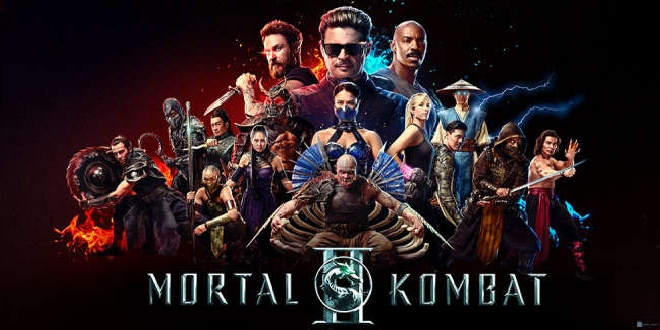
Following the events of the previous film, Earthrealm’s champions continue preparing for the looming Mortal Kombat tournament, where the fate of entire realms hangs in the balance. As old enemies return and new alliances form, fighters including Liu Kang (Ludi Lin), Sonya Blade (Jessica McNamee), Jax (Mehcad Brooks), Cole Young (Lewis Tan), and Raiden (Tadanobu Asano) must unite against the growing threat of Shao Kahn (Martyn Ford) and the forces of Outworld.
Into this supernatural conflict stumbles washed-up Hollywood action star Johnny Cage (Karl Urban), whose arrogance, ego, and complete lack of special powers make him seem wildly unprepared for the brutal realities of Mortal Kombat. Yet, as the battles intensify and the realms edge closer to destruction, Cage and the other warriors must confront not only deadly enemies, but also their own fears, loyalties, and destinies. Alongside the escalating conflict comes Princess Kitana (Adeline Rudolph), whose divided loyalties and growing moral conviction become central to the struggle between tyranny and redemption.
The greatest strength of Mortal Kombat II is that it finally understands exactly what audiences are here for. Logic is secondary. Subtlety is optional. Blood will be spilled in absurd quantities. Bones will snap. Portals will open. Someone will absolutely yell “Fatality!” at maximum intensity.
Director Simon McQuoid leans fully into the fantasy realms, supernatural mythology, and over-the-top violence that made the games iconic in the first place. While there is still plenty of exposition, this time the world-building feels immersive rather than exhausting. The various realms are visually richer, the production design more tactile, and the heightened tone allows the mythology to become part of the fun instead of a burden between fight scenes.
Still, this remains fundamentally a series of elaborate combat sequences connected by a relatively thin narrative. The difference is that this sequel recognises that reality and embraces it unapologetically.
Thankfully, the action largely delivers. The choreography is energetic and creatively staged, with several battles providing the brutal spectacle fans have long been waiting for. Bones break, limbs shatter, and fatalities arrive with appropriately excessive gore. Yet beneath the carnage are moments where the fights actually communicate character and emotion, rather than existing purely for shock value.
One standout sequence involving Liu Kang and Kung Lao (Max Huang) balances visual effects, choreography, and storytelling particularly well. Performance-wise, the cast appears far more comfortable inhabiting this chaotic combat universe. Karl Urban proves an inspired choice for Johnny Cage, bringing the right mix of arrogance, humour, and vulnerability to the fan-favourite character. Josh Lawson once again steals nearly every scene as Kano, whose filthy one-liners and chaotic unpredictability inject much-needed humour into the relentless violence.
Meanwhile, Adeline Rudolph brings genuine emotional weight to Kitana, grounding some of the film’s more melodramatic fantasy elements with sincerity and conviction.
Admittedly, emotional stakes remain limited by the franchise’s relationship with death. In a universe where resurrection and supernatural returns are commonplace, fatalities lose some lasting impact. Characters frequently cheat death, reducing the emotional consequences of many confrontations. Even so, the film surprisingly finds moments of heartbreak and remorse beneath the spectacle, acknowledging that constant violence still leaves scars.
Ultimately, Mortal Kombat II succeeds because it finally embraces the very thing previous adaptations often feared: Mortal Kombat is supposed to be ridiculous. For longtime fans, this sequel will feel far closer to the adaptation they have been waiting for. For general audiences simply wanting an unapologetically violent fantasy action spectacle, there is enough chaotic entertainment here to satisfy their bloodlust.
FATALITY.
REEL DIALOGUE: The greater victory over death
Beneath the fantasy violence and supernatural combat, Mortal Kombat II unexpectedly explores themes of redemption, identity, and sacrificial courage — particularly through the character of Kitana.
Raised within the corruption and tyranny of Outworld, Kitana reaches a point where she must decide whether to remain loyal to the world that shaped her or risk everything to stand for truth and justice. Her story echoes the biblical account of Esther, a young woman placed in a position of influence “for such a time as this” (Esther 4:14). Like Esther, Kitana discovers that courage and sacrifice are often required to confront evil from within broken systems.
The film also wrestles constantly with the reality of death. Fighters fall, warriors return from the grave, and entire realms seem trapped in endless cycles of violence and resurrection. Yet even in this exaggerated fantasy universe, death still casts a shadow over every character.
Christianity offers a radically different answer to death. While Mortal Kombat presents people fighting endlessly to escape death through violence and power, the Gospel points to Jesus Christ, who defeated death not by avoiding sacrifice, but by willingly embracing it on the cross.
In Jesus, resurrection is not simply a temporary return to fight another battle, but the promise of eternal life and complete restoration.
“Where, O death, is your victory? Where, O death, is your sting?” — 1 Corinthians 15:55

Reel Dialogue has entered the world of YouVersion: Download the app, dive into the plans, and engage with the Bible in a fresh and exciting way.
Reel Dialogue has entered the world of YouVersion: Download the app, dive into the plans, and engage.

About Michael Walsh


More Films like this
View All