Ebenezer
Macabre Yet Merry


 12 Nov 2026
 Michael Walsh
There have been seemingly endless adaptations of Charles Dickens' A Christmas Carol, with each generation finding a new way to revisit Ebenezer Scrooge and his supernatural journey towards redemption. We've had animated retellings, Muppet musical extravaganzas and modern adaptations, but surprisingly few have truly embraced the ghoulishness of Dickens' original vision.
Beneath the familiar Christmas cheer is a genuinely macabre ghost story, concerned with death, damnation and the terrifying prospect of a life wasted. Enter Ti West, whose horror credentials make him an unexpectedly appropriate choice to revisit this seasonal classic. With Ebenezer, West reveals the Gothic darkness lurking beneath Dickens’ beloved Christmas fable, delivering a suitably spooky and ultimately heartwarming journey of holiday redemption.
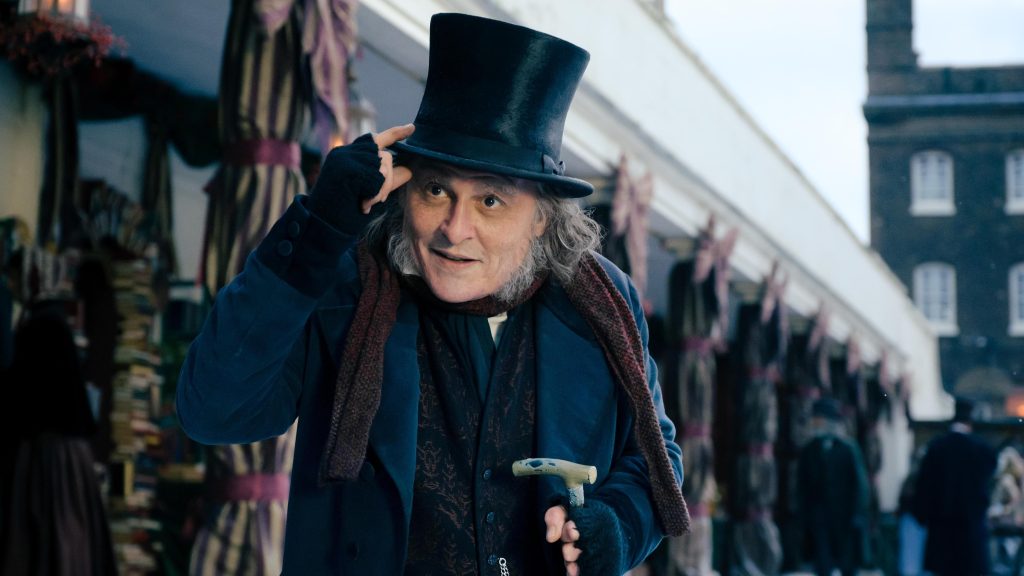
Everyone knows Ebenezer Scrooge (Johnny Depp), a miserly businessman whose obsession with wealth and success has left him bitter, isolated and indifferent to the suffering of others. On Christmas Eve, he is confronted by the ghost of his former business partner, Jacob Marley (Ian McKellen), who warns him of the fate awaiting those who live without compassion. Subsequently visited by three spirits representing Christmas Past (Andrea Riseborough), Present (Tramell Tillman) and Yet to Come, Scrooge must confront the decisions that have shaped his life, the people he has hurt and the terrifying consequences of the person he has become.
Whilst billed as “the characters you know, the story you don’t”, those expecting substantial departures from Dickens’ original may be surprised by just how faithful Ebenezer proves to be. Rather than reinventing the familiar narrative, West understands what has made this story endure, finding new ways to explore both its Christmas cheer and unsettling supernatural foundations. A Christmas Carol is a ghost story first and foremost, and whilst many adaptations lean towards the mystical or sentimental, Ebenezer embraces the Gothic horror of Dickens’ writing. Its hauntings are less intended to shock and terrify than to unsettle, linger and prompt deeper reflection.
West’s horror background makes him a particularly strong choice. His understanding of atmosphere, practical effects and unsettling imagery gives the film a distinctly different texture from its predecessors. The spirits feel genuinely otherworldly, whilst the Victorian setting is wonderfully realised through impressive production design, costumes, makeup and prosthetic work. Importantly, however, West never allows the horror to overwhelm the heart of the story. The supernatural encounters confront Scrooge with his mortality, forcing him to recognise that the greatest monster may well be the man staring back at him in the mirror.
Johnny Depp is wonderfully curmudgeonly as the eponymous Scrooge, delivering a performance that is simultaneously theatrical, eccentric and surprisingly vulnerable. He gradually reveals the humanity buried beneath the bitterness, making this perhaps his strongest performance since Black Mass a decade ago. The supporting ensemble, particularly McKellen, Tillman, Riseborough and Rupert Grint as Bob Cratchit, is similarly well cast, although some other recognisable faces are perhaps underutilised given their considerable star power.
There is also something refreshing about the film’s approach to mainstream filmmaking. Ebenezer feels like the kind of studio production that might comfortably have arrived in cinemas 15 or 20 years ago: a recognisable literary property, a major Hollywood star and an accessible story with enough spectacle to appeal to a broad audience. Perhaps this reflects David Ellison’s Skydance ambitions for Paramount, signalling a return towards a more conservative, crowd-pleasing studio slate rather than an emphasis on progressive, R-rated and sexually mature filmmaking. Whatever the broader industry implications, there is something reassuring about a film embracing traditional Hollywood storytelling.
“God bless us, every one!”
Seasonal, spiritual and faithful, Ebenezer is a suitably spooky ghost story that captures the Gothic Victorian era whilst retaining the magical fable and enduring warmth of Dickens’ classic. With a wonderfully curmudgeonly Depp leading the way, West demonstrates that his horror sensibilities can translate into a commercial, broadly appealing production without sacrificing its humanity. Pleasantly surprised by just how much I enjoyed this, I feel very comfortable recommending Ebenezer as a potential definitive adaptation for a new generation and an easy addition to the Christmas viewing calendar.
REEL DIALOGUE: Three Ghosts, Three Dialogues
Part of what makes Ebenezer so effective is its understanding of the redemptive possibilities at the centre of Dickens’ story. This is more than a tale about Christmas generosity; it is a story about sin, repentance, mercy and the possibility of new life. Dickens was a deeply religious man whose Christian convictions informed much of his writing, particularly his concern for the poor and marginalised. His Christmas fable is infused with Christian ideas of compassion and redemption, pointing towards the greater hope found in the story of the King of Kings. What makes A Christmas Carol such an enduringly Christian story is the way Scrooge’s encounters with the three spirits invite reflection on the past, present and future of his own soul. Each ghost offers a different perspective on the human condition, and each provides an opportunity to consider what the Gospel has to say about our own lives.
The Past – The Cost of Success
“I would count any cost for the sake of my success.”
Scrooge’s relationship with wealth and ambition is perhaps the most obvious manifestation of his spiritual bankruptcy. He has spent his life pursuing financial prosperity at the expense of almost everything else, sacrificing relationships, compassion and ultimately his own humanity. His willingness to count any cost for success is a familiar temptation in a world that so frequently measures worth through achievement, influence and material possessions.
The Gospel offers a rather different understanding of success. In Mark 8:36, Jesus asks, “What good is it for someone to gain the whole world, yet forfeit their soul?” It is a confronting question that speaks directly to Scrooge’s priorities. What does it profit a person to accumulate wealth, status and earthly recognition if they have lost sight of what truly matters? Jesus calls His followers to seek first the kingdom of God, rather than becoming enslaved to the temporary treasures of this world. Scrooge’s greatest tragedy is not that he has become wealthy, but that he has allowed the pursuit of wealth to become his god.
The Present – The Story of Christmas
“I hope this Christmas seeing a cripple reminds them of the One who made beggars walk and blind men see.”
There is perhaps no more beautiful expression of the Christian heart of Christmas than this sentiment from Tiny Tim. Whilst Scrooge sees the poor as an inconvenience and a burden upon society, Tim sees Christmas as an opportunity to remember the One who came to bring hope to the broken, healing to the suffering and good news to the poor.
The incarnation is not simply a sentimental story about a baby in a manger. It is the extraordinary declaration that God entered into His creation, taking on human flesh in the person of Jesus Christ. The King of Kings did not arrive in earthly splendour or political power, but in humility, identifying with the lowly and the vulnerable. Throughout His earthly ministry, Jesus consistently demonstrated compassion towards those society had forgotten, healing the sick, restoring the broken and extending grace to those on the margins.
Tiny Tim’s words are a reminder that Christmas should direct our attention beyond ourselves. The celebration of Christ’s birth ought to cultivate the same compassion, generosity and love that Jesus demonstrated. It is not enough to simply enjoy the festivities whilst remaining indifferent to the suffering of those around us. The story of Christmas calls us to recognise the image of God in others and respond with the kind of love that reflects the One whose birth we celebrate.
The Future – A Story of Redemption
“I was good once.”
“I’m not the man I was before.”
Perhaps the most significant part of Scrooge’s journey is his realisation that his future does not have to be determined by his past. The Ghost of Christmas Yet to Come forces him to confront the ultimate consequences of his choices, revealing a future in which his death is met with celebration and his legacy amounts to little more than the possessions he leaves behind. It is a terrifying vision of a life lived without love, generosity or meaningful relationships.
Scrooge’s response is ultimately one of repentance. His declaration that he was once good, and that he is no longer the man he was before, reflects an understanding that transformation is possible. He cannot undo the mistakes of his past, but he can choose to live differently in the present and say sorry to those he still can. There is something deeply resonant here with the Christian understanding of salvation. The Gospel does not promise that our past will be erased from history, but that through Christ we can be forgiven, reconciled to God and made new.
In 2 Corinthians 5:17, Paul writes, “If anyone is in Christ, the new creation has come: The old has gone, the new is here!” This is the hope that sits at the heart of Scrooge’s transformation. His story is not simply one of becoming a nicer person, but of recognising the emptiness of his former life and embracing an entirely different way of living. Whilst Dickens’ fable is not a direct allegory of Christian salvation, its message of repentance, mercy and the possibility of new beginnings points towards the greater hope found in the Gospel.
There is a reason Dickens’ story continues to resonate across generations. We all have a past that cannot be changed, a present in which we must make choices and a future that remains uncertain. But the Christian message of Christmas reminds us that redemption is possible, that grace is extended to the undeserving and that we are not destined to remain the people we once were. Scrooge’s transformation may be a fictional Christmas miracle, but it points towards a far greater reality: the new life offered through Jesus Christ.
“For to us a child is born, to us a son is given, and the government will be on his shoulders. And he will be called Wonderful Counselor, Mighty God, Everlasting Father, Prince of Peace.” — Isaiah 9:6

Reel Dialogue has entered the world of YouVersion: Download the app, dive into the plans, and engage with the Bible in a fresh and exciting way.
Reel Dialogue has entered the world of YouVersion: Download the app, dive into the plans, and engage.

About Michael Walsh


More Films like this
View All