Heart of the Beast
Never underestimate what a man will do for his dog. Or what a dog will do for his man.


 19 Sep 2026
  Russ Matthews
 David Ayer has had a hit-and-miss career, but one thing can be said about the Fury director: he knows how to get a great performance out of Brad Pitt. In Heart of the Beast, Ayer strips away much of the dialogue and allows his leading man to deliver a measured, physical and surprisingly tender performance alongside a co-star who almost manages to steal the film from him.
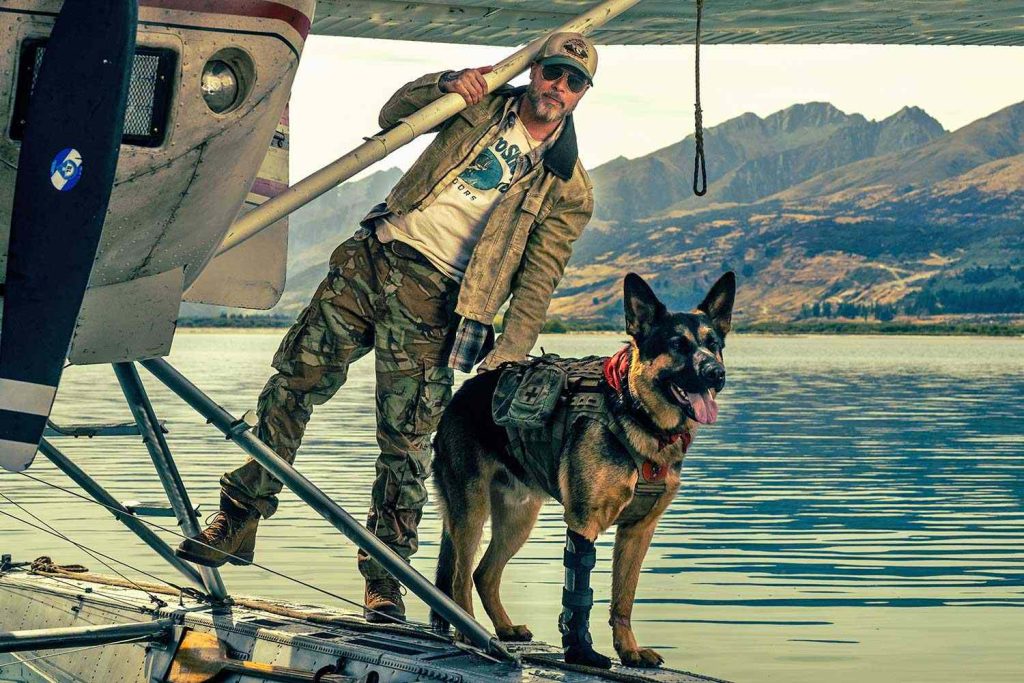
That would be Odin. This magnificent canine proves to be considerably more than a cinematic prop. His trained responses, expressions and connection with Pitt provide much of the film's emotional weight, creating a story that relies less on conversation and more on the relationship between man and beast.
James Belmont (Brad Pitt) is a former Special Forces soldier whose life remains deeply connected to Odin, his military combat dog. Circumstances eventually leave the pair fighting for survival in the Alaskan wilderness, where their years of training and trust are put to the ultimate test. James and Odin share a history forged through military service, and their journey gradually reveals how dependent these two veterans have become on one another. As injuries, the elements and the dangers of the landscape close in, getting home will require the same loyalty that once kept them alive in combat.
Despite its Alaskan setting, the spectacular landscapes of New Zealand provide the backdrop for this survival tale, and they are used beautifully.
Brad Pitt meets his match
There are obvious comparisons with Channing Tatum’s Dog, but Heart of the Beast takes the relationship between soldier and military dog into considerably more intense territory. It also provides a moving acknowledgement of the thousands of military working dogs that have served alongside armed forces throughout history. Ayer doesn’t need lengthy speeches to communicate that bond. For considerable stretches, there is little to no dialogue.
Instead, the film relies on Pitt’s physical performance and Odin’s remarkably expressive presence. Pitt commits completely to the role. He allows himself to look vulnerable, exhausted and increasingly dependent upon the animal travelling beside him. It is a measured and strong performance that reminds us why Pitt remains one of Hollywood’s most compelling leading men. Yet Odin is magnificent.
Whoever said never work with children or animals obviously hadn’t met this dog. The canine performance is remarkable, with Odin’s trained movements and responses giving the animal a genuine screen presence rather than merely functioning as something for Pitt’s character to protect. Their relationship feels lived in, and that connection is essential because the film asks audiences to remain invested in them for long periods with very little dialogue.
Not quite Man vs Wild
Those expecting a straightforward wilderness survival film may be surprised. There are moments of considerable danger, injuries and encounters with wildlife, but Ayer seems less interested in providing an instructional guide to surviving Alaska than exploring the emotional connection between these two battle-worn companions. Admittedly, there are moments when James appears remarkably fortunate to discover exactly the supplies required to keep moving. Survival enthusiasts may wonder whether the Alaskan wilderness secretly operates its own convenience store.
The CGI wildlife can also occasionally remind us that the animals supposedly threatening James and Odin aren’t indigenous to the beautiful New Zealand locations where the film was shot. Yet these are relatively minor distractions. The wilderness remains both beautiful and threatening, giving the story an almost mythical quality. This isn’t necessarily survival realism. Instead, it becomes a heartfelt journey about a man and dog who have already fought together and now find themselves facing one final battle.
What should parents know?
Despite having a dog at the centre of the story, this isn’t family entertainment for younger children. Heart of the Beast contains intense survival situations, violence, injuries and frightening encounters with wildlife. There are also themes surrounding military service, trauma and the lasting effects of combat.
Dog lovers should be particularly prepared. Odin is placed in significant danger, and because the film does such an effective job of making audiences care about him, these moments can become genuinely difficult to watch. This is not a gentle adventure about a man hiking through the wilderness with his faithful dog. Some sequences are confronting and emotionally intense.
Older teenagers and adults, however, may find considerably more here than the usual survival thriller.
The bottom line
David Ayer has delivered one of his more restrained films by recognising that sometimes less really is more. Brad Pitt doesn’t need pages of dialogue. Odin certainly doesn’t need any. Together they carry Heart of the Beast because we believe in their relationship. Pitt reminds us of his ability to hold an audience with remarkably little dialogue, while Odin proves that four legs are more than enough to share the screen with one of Hollywood’s biggest stars.
There are survival conveniences and some questionable CGI wildlife, but they don’t undermine the emotional heart of the story. Ultimately, this isn’t merely about surviving the wilderness. It is about a man and a dog who have already fought in the trenches together and are left with one final battle to fight side by side.
REEL DIALOGUE: Did God create dogs to teach us about loyalty?
Dogs occupy an extraordinary place in human life.
They serve alongside soldiers, guide those who cannot see, search for the missing, protect families and sometimes simply sit beside us when words aren’t enough. Heart of the Beast makes loyalty tangible through James and Odin. Neither needs to explain their relationship. Their actions demonstrate it.
The Bible consistently treats faithfulness as valuable because it reflects the character of God himself:
“Know therefore that the LORD your God is God, the faithful God who keeps covenant and steadfast love.” — Deuteronomy 7:9 (ESV)
Proverbs also describes the kind of relationship most of us long to experience:
“A friend loves at all times, and a brother is born for adversity.” — Proverbs 17:17 (ESV)
Of course, the Bible doesn’t tell us that God created dogs specifically to teach humanity about loyalty. Yet perhaps the loyalty we see in them can remind us of something greater. Odin’s devotion is powerful because it doesn’t depend upon comfort or convenience. When the journey becomes dangerous, he remains beside his master.
For Christians, this provides a small reflection of the much greater faithfulness of God, who promises not merely to be present when life is comfortable but to remain with his people through the wilderness. Maybe that’s why stories about people and their dogs affect us so deeply.
We all long for someone who will stay beside us when the journey becomes difficult.

Reel Dialogue has entered the world of YouVersion: Download the app, dive into the plans, and engage with the Bible in a fresh and exciting way.
Reel Dialogue has entered the world of YouVersion: Download the app, dive into the plans, and engage.


