Forgotten Island
Filipino Fantasy Friendship


 15 Sep 2026
  Michael Walsh
 DreamWorks Animation has spent much of the last decade searching for its identity. While the studio once built its reputation on films like Shrek, Madagascar and How to Train Your Dragon, recent years have seen a heavier focus on younger audiences through franchises such as Trolls and The Boss Baby.
There’s been glimmers of the studio we used to know with Puss in Boots: The Last Wish and The Wild Robot and thankfully, Forgotten Island is another return to the studio’s strengths: ambitious animation, genuine emotional depth and storytelling that appeals to more than just children. Directed by the creative team behind Puss in Boots: The Last Wish, Forgotten Island blends Filipino mythology with a coming-of-age friendship story that feels like a collision between Moana, Turning Red, Spirited Away and KPop Demon Hunters. The result is one of DreamWorks’ most engaging and emotional films in years.
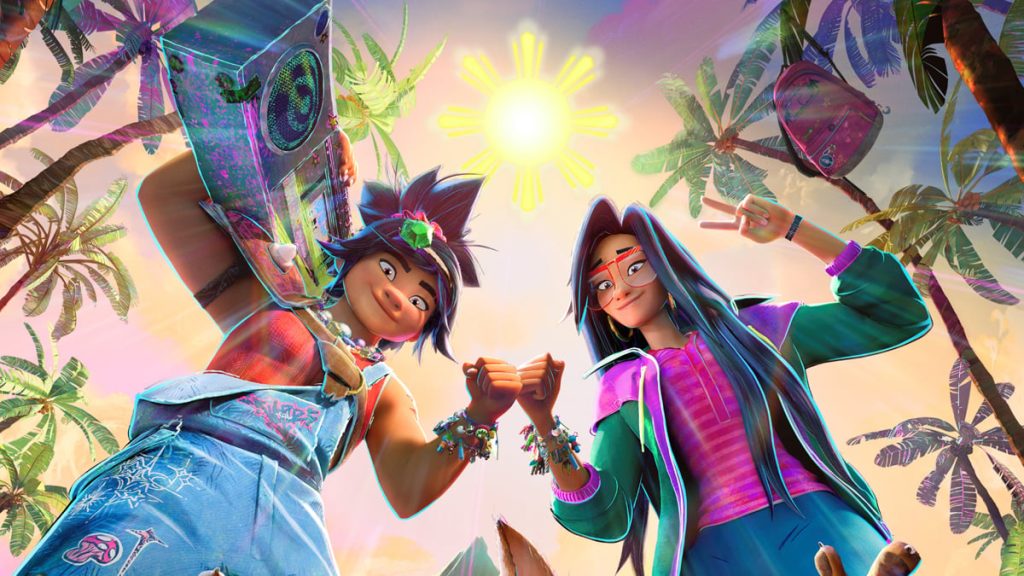
Set in the Philippines during the 1990s, Jo (H.E.R.) and Raissa (Liza Soberano) have been best friends since childhood, united by a love of the macabre and a quest fuelled by Jo’s grandma Lola (Dolly de Leon) to find the fantastical world of the forgotten island of Nakali, where monsters and magical beings dwell. However, as the pair approach young adulthood, Raissa reveals she will be moving to the US for college. Fearing the loss of their bond, Jo tries to persuade her to stay and during one final night together hanging out, the two are suddenly transported through a portal to the mythical realm of they’ve dreamed of since childhood. Together, with the help of were-dog Raww (Dave Franco), they must navigate not only memory demons, monsters and magical creatures, but also the changing future of their friendship. The result is a wonderfully heartfelt film that feels both fresh and new yet deeply rooted in ancient cultural folklore.
Key to the film’s success is the pairing of these two friends, with Raissa serving as the grounded straight woman to Jo’s eccentric and impulsive energy, creating a comedic dynamic that consistently entertains. But beneath the laughs is a recognisable tension familiar to many young adults: what happens when two people who have built their lives around one another begin moving in different directions?
Ironically, the film’s greatest strength also becomes its greatest weakness. Forgotten Island is constantly moving. The jokes come rapidly, the visual gags rarely stop, and nearly every scene introduces a new comedic bit or eccentric character. While much of it lands, the relentless pace occasionally creates comedic fatigue. There are moments where the film would benefit from slowing down and allowing its emotional beats room to breathe.
This issue becomes most noticeable in the final act. Several character reversals and emotional turns arrive in quick succession, creating a sense that the story is rushing toward its conclusion. Some developments feel compressed, and a few key moments could have benefited from additional space to unfold naturally, but despite these shortcomings, the ending lands with remarkable emotional power. As the film explores what it means to care for your friend while allowing them to grow and change, it arrives at a conclusion that feels honest, bittersweet and deeply moving. It’s a teary-eyed finale that elevates the film beyond being merely another colourful animated adventure.
But speaking of colourful adventure, Nakali itself is a triumph of animation and design. Every frame bursts with colour, movement and creativity. The filmmakers draw heavily from Filipino folklore, creating a world populated by fascinating creatures and spirits that feel distinct from the mythologies more commonly represented in Western animation. The visual style is kinetic and energetic and reminiscent of other recent Western animated films increasingly taking influence from anime and classic 2D animation styles.
Parents should note that while this is very much a family film, it sits closer to the traditional DreamWorks mould of Shrek, Madagascar and How to Train Your Dragon than younger-skewing fare like Trolls or Dog Man. The humour is more contemporary, the themes are more mature and the emotional core will likely resonate most strongly with teenagers and adults.
Frenetic, Filipino and full of fun, Forgotten Island occasionally exhausts itself trying to entertain, but it never loses sight of its heart. Visually spectacular, emotionally resonant and refreshingly original, it’s a welcome reminder of DreamWorks at its best.
Reel Dialogue: Covenant Friendship
One of the most beautiful aspects of Forgotten Island is its portrayal of friendship that endures through change. Jo and Raissa discover that genuine friendship isn’t about preventing someone from growing or keeping them exactly where they are. Instead, it’s about remaining faithful to one another even when life takes unexpected turns.
The Bible offers a powerful example of this kind of friendship in David and Jonathan. Despite knowing that David would one day become king instead of him, Jonathan remained fiercely loyal to his friend. Their relationship was built not upon personal benefit or convenience but upon covenant commitment.
1 Samuel 18:3 tells us that “Jonathan made a covenant with David because he loved him as himself.” Their friendship was characterised by sacrifice, loyalty and a desire to seek the other’s good. Jonathan repeatedly supported David even when it cost him personally.
Modern culture often treats friendships as temporary arrangements that last only while circumstances remain favourable. But biblical friendship is something deeper as it reflects God’s own faithful love and commitment to us in Jesus.
Like Jo and Raissa, David and Jonathan’s friendship faced uncertain futures and difficult transitions, but it endured because it was built on something greater than shared experiences. It was grounded in mutual love, trust and faithfulness. Have you found a forever friend in Jesus?
“A friend loves at all times” (Proverbs 17:17).

Reel Dialogue has entered the world of YouVersion: Download the app, dive into the plans, and engage with the Bible in a fresh and exciting way.
Reel Dialogue has entered the world of YouVersion: Download the app, dive into the plans, and engage.

About Michael Walsh


More Films like this
View All The Love Hypothesis
Love might be difficult to prove scientifically, but that has never stopped Hollywood from experimenting with the formula.