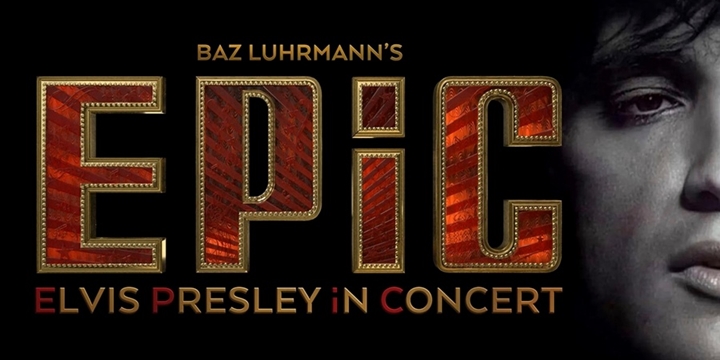
EPiC
Elvis Presley in Concert


 4 Feb 2026
  Russ Matthews
 Baz Luhrmann’s Elvis (2022) drew mixed reactions from longtime fans of the King, though Austin Butler’s performance was nearly universally praised for capturing the spirit and presence of Elvis Presley. During the making of that film, Luhrmann began searching for previously unseen archival material to incorporate into the narrative. What he uncovered was a motherlode of 35mm and 8mm film—containing interviews, concert footage, and behind-the-scenes moments—that was far too significant to be buried once again.
Baz Luhrmann’s Elvis (2022) drew mixed reactions from longtime fans of the King, though Austin Butler’s performance was nearly universally praised for capturing the spirit and presence of Elvis Presley. During the making of that film, Luhrmann began searching for previously unseen archival material to incorporate into the narrative. What he uncovered was a motherlode of 35mm and 8mm film—containing interviews, concert footage, and behind-the-scenes moments—that was far too significant to be buried once again.
Rather than folding this material into Elvis, Luhrmann chose to pursue a passion documentary project that became EPiC: Elvis Presley in Concert. Much of the recovered footage lacked synchronised audio, requiring Luhrmann and his team to painstakingly source complementary interviews and performance recordings. Over the course of two years, the images were restored and carefully paired with the appropriate sound elements to create a cohesive cinematic experience.
The award-winning filmmaker has described the project as “something new in the Elvis canon… that befits the magnitude of Elvis as a performer, but also offers deeper revelations of his humanity and inner life.”
Audiences do not need to be devoted Elvis fans to appreciate this film, which traces this muic legend’s journey toward the Las Vegas era of his career. At its core, EPiC is a celebration of the pure joy Presley experienced when performing live. Through rehearsals, choreography, and stage performances, we witness the artist at his best—sharing his talent, passion, and love for his fans. The songs transcend his lifetime and continue to resonate across generations.
EPiC offers longtime fans something genuinely new while reintroducing the human side of Elvis Presley to a broader audience. It is a film that reaffirms his status as a consummate performer and illustrates how his influence continues to echo through popular culture today. Rather than revisiting the tragedy of his final years, Baz Luhrmann gives audiences the gift of seeing the joy, energy, and vitality of a singular force in entertainment history.
REEL DIALOGUE: Do you need to be an Elvis fan to appreciate EPiC?
No—but be warned, you may leave the theater as one, astonished by just how many songs this artist gifted to the world.
Luhrmann’s artistry makes the film accessible both to lifelong fans and to those who may only recognise a single Elvis song. Watching EPiC feels like attending a concert by a favourite musician: closing your eyes, letting the music wash over you, and allowing yourself to be carried into the world they create.
Art and music exist in many forms, and appreciation takes countless shapes. Some are drawn to country music, others to rhythm and blues, and still others to the endless variety available at the tap of a screen. Yet beneath those preferences lies a deeper question—why do humans create music at all?
The answer is complex, but also beautifully simple. A creative God has woven music into the fabric of our lives. The master musician inspires the finest expressions of structured sound, and humanity instinctively yearns for music because it transports us through every emotion we can feel. Music awakens the artist within us because creativity itself is part of our design. The created are creative because we reflect the artistry of the Master Creator.

Bible References
Isaiah 64:8 "But now, O Lord, you are our Father; we are the clay, and you are our potter; we are all the work of your hand."

Reel Dialogue has entered the world of YouVersion: Download the app, dive into the plans, and engage with the Bible in a fresh and exciting way.
Reel Dialogue has entered the world of YouVersion: Download the app, dive into the plans, and engage.


