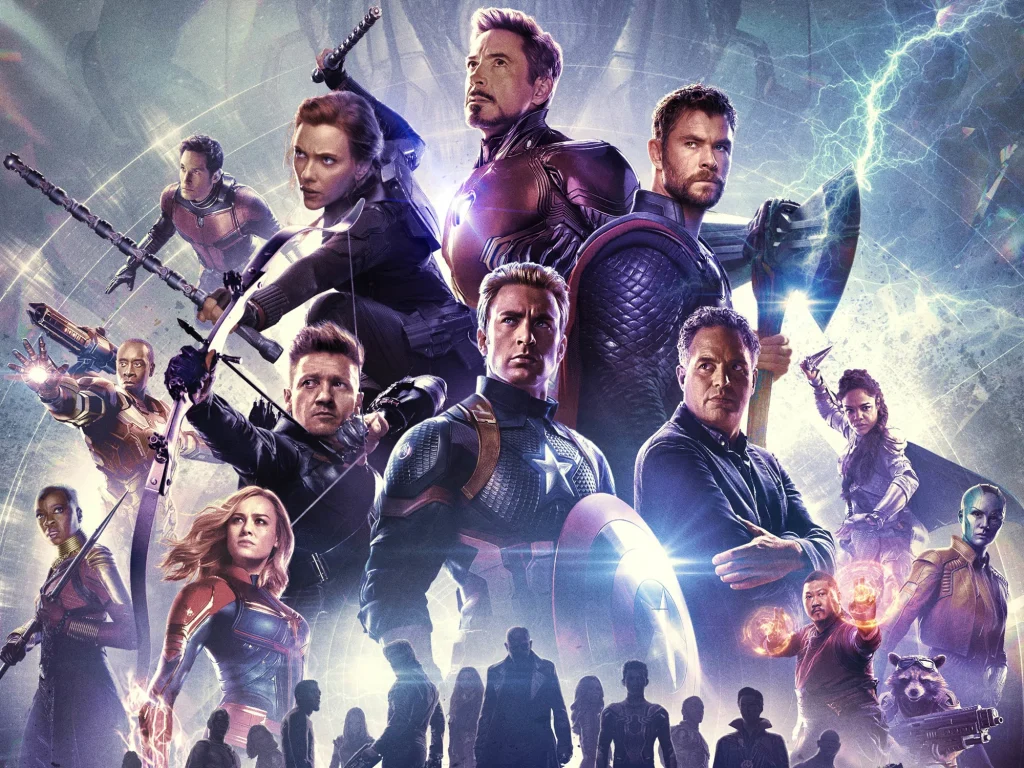
Avengers: Endgame
Have they ever topped it?


 27 Sep 2026
  Russ Matthews
 Seven years ago, Avengers: Endgame felt like the triumphant culmination of everything Marvel had spent more than a decade building, but returning to it in 2026 comes with considerably more complicated emotions. With Avengers: Doomsday approaching, Marvel fans seem caught somewhere between genuine excitement at seeing these heroes assemble again and understandable scepticism over whether the MCU can recapture the magic that made Endgame such a cultural event. Avengers: Endgame — Encore gives us the perfect opportunity to return to where Marvel once reached its cinematic summit and ask the question hanging over Doomsday: can they possibly do it again?
After the snap
For those needing a refresher, Avengers: Infinity War concluded with Thanos accomplishing precisely what he set out to do. With the snap of his fingers, half of all living creatures disappeared from existence. Those left behind are not merely trying to work out what happened. They are grieving.
That is one of the reasons Endgame remains so effective. The surviving Avengers have fought aliens, gods, robots and armies, but this time they begin the film having lost. Each responds differently to grief, guilt and the uncomfortable reality that despite possessing extraordinary abilities, they could not save everyone. The remaining heroes eventually begin considering whether the seemingly impossible can somehow be undone. What follows becomes an ambitious attempt to honour more than a decade of interconnected storytelling while finding a way forward for those left standing.
Watching it again, knowing everything that follows, only reinforces how enormous a task directors Anthony and Joe Russo faced.
How do you finish something this big?
Endgame needed to be an action film, a character drama, a celebration of the MCU, a conclusion to multiple stories and a launching point for whatever Marvel intended to do next. Somehow, it manages most of these things remarkably well.
The Russo brothers find the heart and humour without allowing either to undermine the consequences of Infinity War. The twists and turns are carefully constructed, but the greatest achievement is how much respect the film shows for characters audiences had followed for more than a decade. In less experienced hands, this could easily have become three hours of fan service and loose ends being tied into convenient knots. There is certainly fan service. Lots of it.
Yet most of those moments feel earned because Marvel had spent years laying the groundwork.
That may be the biggest lesson Doomsday has to learn from Endgame. Audiences weren’t cheering merely because familiar characters appeared on screen. They cared because they had travelled with these characters, watched their relationships develop and understood what was at stake when they stood beside one another. Spectacle mattered, but investment mattered more.
The heart beneath the spectacle
For all the visual effects, battles and superhero theatrics, Endgame works because it understands that audiences came for the Avengers rather than merely the action. Robert Downey Jr., Chris Evans, Scarlett Johansson, Chris Hemsworth, Mark Ruffalo and Jeremy Renner had inhabited these characters for years by this point. The film allows that history to carry emotional weight without needing to explain every relationship again. There is loss, regret, friendship, sacrifice and the question of what these heroes are willing to give to restore something they have already lost.
The humour remains unmistakably Marvel, occasionally threatening to undermine the drama, but when Endgame needs to become serious, it knows when to stop joking. More importantly, it understands the value of an ending. Not every character needs to continue forever. Not every story requires another sequel. Sometimes allowing a character’s journey to reach its destination is more satisfying than endlessly searching for another reason to bring them back. Which makes watching Endgame in 2026 rather fascinating.
We now know Marvel didn’t end here. Far from it.
Yet with Doomsday preparing to bring audiences back into another enormous Avengers event, Endgame stands as a reminder that bigger casts, larger battles and familiar faces are not enough on their own. You have to make us care.
Does Endgame still work?
Absolutely. Some elements inevitably feel different after everything the MCU has attempted since 2019, but the emotional foundation remains remarkably strong. If anything, the intervening years have made it easier to appreciate what Marvel achieved.
This wasn’t simply another superhero blockbuster. It was the culmination of an extraordinary cinematic experiment that had asked audiences to follow dozens of characters across multiple franchises before bringing them together for a genuine conclusion. Whether Endgame remains the best film in the MCU will continue to provide plenty of debate in coffee shops and online forums. Yet it remains one of Marvel’s defining achievements.
The question for Doomsday isn’t whether Marvel can make something bigger. It is whether they can make us care this much again.
REEL DIALOGUE: How do you finish something of this magnitude well?
Watching Avengers: Endgame again makes it difficult to avoid thinking about endings.
The Avengers know they are moving towards a final confrontation. Victory will involve sacrifice. There will be tears, loss and consequences that cannot simply be undone. For Christians, stories about ultimate battles between good and evil naturally bring to mind the Bible’s final book. Revelation can seem intimidating with its imagery, judgement and cosmic conflict, but underneath it all is something remarkably hopeful: evil does not get the final word.
That doesn’t mean every painful moment is avoided. There is suffering. There is sacrifice. There are tears. But there is also restoration.
Near the conclusion of Revelation, John writes:
“He will wipe away every tear from their eyes, and death shall be no more.” — Revelation 21:4
That is considerably more than the superhero promise that the good guys eventually win.
Christian hope rests on the belief that history is actually going somewhere. Evil will be judged, brokenness will not continue forever and the God who began the story will also bring it to completion.
Then, near the Bible’s final words, Jesus says: “I am the Alpha and the Omega, the first and the last, the beginning and the end.” — Revelation 22:13
Endgame gives us a fictional universe desperately searching for a way to undo death, loss and destruction. Revelation offers something different.
Not superheroes desperately attempting to turn back time, but a God who promises ultimately to make all things new.
Perhaps that is why we remain drawn to stories where good finally defeats evil and broken things are restored.
We all want to know that when the final page is turned, there is still hope.

Reel Dialogue has entered the world of YouVersion: Download the app, dive into the plans, and engage with the Bible in a fresh and exciting way.
Reel Dialogue has entered the world of YouVersion: Download the app, dive into the plans, and engage.

About Russ Matthews


More Films like this
View All