

 4 Mar 2026
  Russ Matthews
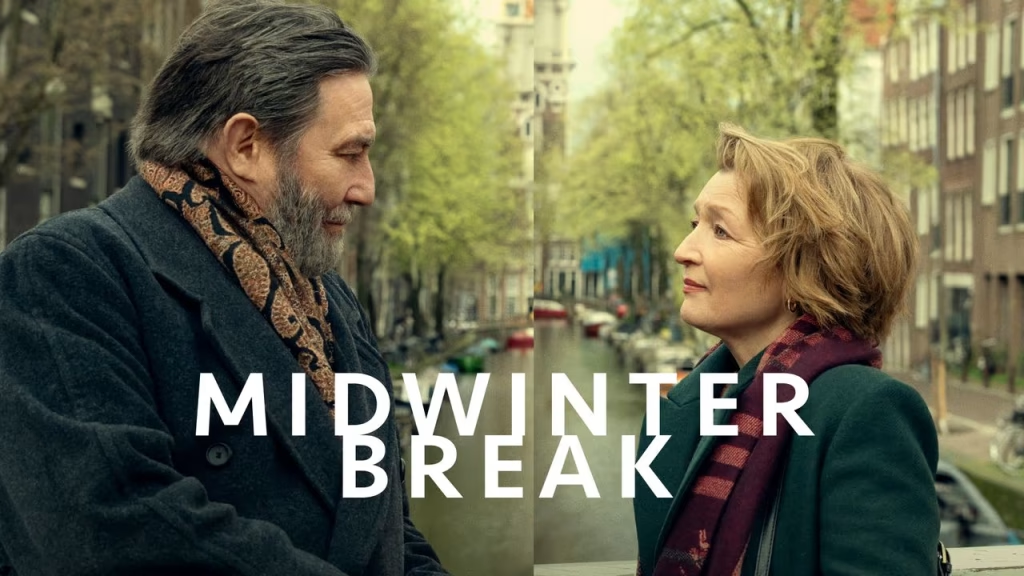
 Stella (Lesley Manville) and Gerry (Ciarán Hinds) find themselves in the winter of their marriage, a stage of life that often arrives in the post-retirement years. As the couple move through the routines and familiar rhythms that have defined their relationship, Stella begins to long for something more. On a whim, she books a trip to Amsterdam in the hope of breaking the monotony of their everyday life.
At first, the journey seems like a refreshing opportunity to rediscover the joy of their years together. Yet upon arrival, Stella reveals the real reason for the trip. Her confession reaches deep into the couple’s past and threatens to reshape their future in ways neither of them anticipated.
First-time director Polly Findlay brings Bernard MacLaverty’s novel to the screen, exploring the emotional and spiritual complexities that often surface in the later seasons of life. This reflective story about unresolved regrets and enduring relationships becomes quietly compelling thanks to the performances of Lesley Manville and Ciarán Hinds. Both veteran actors deliver deeply authentic portrayals of a couple burdened by past pain while attempting to make sense of the years that remain.
The film unfolds with a deliberate pace that may test the patience of some viewers. Its reflective tone and understated storytelling create a sense of lethargy that could challenge audiences expecting more conventional dramatic momentum. However, the emotional honesty of the narrative—combined with the commanding performances of its central cast—ultimately brings the story to a moving conclusion.
Midwinter Break will particularly resonate with viewers who find themselves in similar seasons of life, offering an empathetic reflection on marriage, regret, and the possibility of reconciliation in the later chapters of our journey.
REEL DIALOGUE: Is Life Worth Living?
That might seem like a confronting question to raise in the middle of a film review. Yet it is one that many people quietly wrestle with throughout their lives.
Moments of reflection—especially when we are confronted with our own mortality—often lead us to ask deeper questions about purpose, meaning, and value. Why are we here? What makes life truly worthwhile?
These are simple questions on the surface, yet they carry profound complexity. Fortunately, the Bible speaks extensively about life’s meaning and purpose.
Jesus addressed this longing directly when He spoke about the kind of life God desires for humanity. His words point to a life that goes beyond mere existence:
“I have come that they may have life, and have it to the full.” — John 10:10
According to Jesus, life was never meant to be empty or purposeless. Instead, it finds its fullest meaning when we discover the relationship with God that we were created for.
Even in seasons marked by regret, loneliness, or uncertainty—like the one experienced by Stella and Gerry—there remains the possibility of renewal and hope. The promise of the Christian message is that life is not only worth living, but that it can ultimately lead to something eternal.
Wow, life to the full. Sounds good, So, I guess I’m saying a good place to start when considering the value of life, why not give the Bible a try?

Reel Dialogue has entered the world of YouVersion: Download the app, dive into the plans, and engage with the Bible in a fresh and exciting way.
Reel Dialogue has entered the world of YouVersion: Download the app, dive into the plans, and engage.


