Hexed
Beyond the spells and sorcery lies a surprisingly heartfelt tale of the imperfectly perfect love between a mother and daughter


 25 Nov 2026
 Russ Matthews
Walt Disney Animation Studios has been dabbling in magic for close to a century. From the wicked queen in Snow White and the Seven Dwarfs to the fairy godmother in Cinderella and the extraordinary abilities of the Madrigal family in Encanto, there has rarely been a shortage of supernatural elements within the studio's storytelling. Yet, with the arrival of Hexed, the House of Mouse ventures into a world where witchcraft is an integral part of a teenager's journey of self-discovery. For many parents, the question will be whether this latest offering lands on the Harry Potter side of the cinematic equation or ventures further into the darker arts and their place in the lives of impressionable teenagers.
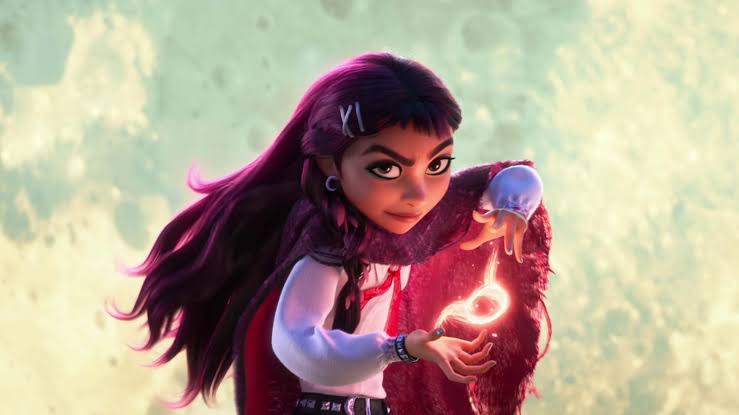
At the centre of this magical adventure is sixteen-year-old Billie Doe (Hailee Steinfeld), an unconventional teenager who has never quite felt at home in her suburban existence. Her relationship with her overly protective mother, Alice (Rashida Jones), becomes considerably more complicated when Billie discovers she possesses supernatural abilities. Their lives are turned upside down as they discover Hexe, a hidden realm inhabited by witches, where family secrets begin to emerge. Along the way, they encounter an eccentric three-eyed cat named Beef Roger Crummchuk (Walton Goggins) and cross paths with Queen Celeste (Jodie Foster), whose desire to retain her position of power threatens their newfound world.
One of the pleasant surprises of Disney’s latest animated adventure is that it isn’t a musical. Instead of having its characters break into song at every emotional crossroads, the filmmakers allow this coming-of-age story to develop through the relationship between a mother and daughter. Billie has spent much of her life on the outside looking in, unaware of her potential and frustrated by her mother’s seemingly excessive desire to protect her. Yet, beneath the magical spectacle lies a surprisingly relatable tale of parenthood and the challenges of allowing our children to discover who they are.
Interestingly, there is no romantic element to this story. Considering Disney’s heritage and the tendency for coming-of-age adventures to incorporate a romantic interest, it is refreshing to see the filmmakers resist this temptation. That is not to say Hexed isn’t a love story. Instead of a handsome prince or a teenage crush, this tale celebrates the love between a mother and daughter and how this extraordinary bond can survive in any realm. There is something admirable about a production that recognises that a young woman’s journey of self-discovery need not involve finding a romantic partner.
Directors Fawn Veerasunthorn and Jason Hand deliver a visual spectacle that showcases the extraordinary talents of Disney’s animation team. The imaginative world of Hexe provides a colourful canvas for the filmmakers, while an impressive voice cast works its way through a relatively predictable screenplay. There are few narrative surprises for anyone familiar with Disney’s storytelling formula, but the emotional connection between Billie and Alice provides enough heart to compensate for some of the screenplay’s shortcomings.
Jodie Foster proves to be an effective villain, bringing authority and menace to Queen Celeste, although there remains a yearning for her character to find redemption. Yet the scene-stealer is undoubtedly Walton Goggins as Beef Roger Crummchuk. The actor’s comedic charms translate beautifully into this three-eyed feline, who delivers some of the film’s most endearing lines and heartwarming moments. If Disney is looking for a character worthy of further adventures, they may have found one in this rather unconventional cat.
Still, the greatest value of Hexed is found in the bonding of mother and daughter as they discover that both have something hidden within them that could benefit the world. Alice’s imperfectly perfect love for Billie is something many parents will recognise. Her desire to protect her daughter may occasionally undermine Billie’s independence, but it comes from a place of genuine affection. Equally, Billie must appreciate that her mother’s imperfections do not diminish the depth of her love.
As entertaining as this adventure proves to be, the filmmakers lean heavily into the realm of witchcraft. Some of the darker imagery and supernatural encounters make this production less accessible to children under seven or eight. Parents should take the PG classification seriously, particularly if their children are sensitive to frightening imagery or darker spiritual themes.
Ultimately, Hexed offers an entertaining, visually impressive and occasionally touching adventure, even if its predictable storyline prevents it from ranking amongst Disney’s finest. There is much to appreciate in its celebration of a love that doesn’t require romance, proving that the bond between a mother and daughter can transcend even the boundaries of a magical realm. Yet the less-than-subtle witchcraft narrative will be something families need to consider. Like Wicked, The Wizard of Oz and countless other productions throughout cinematic history, audiences will need to determine for themselves whether this is a world they wish to entertain in their homes.
REEL DIALOGUE: Where Does Fantasy End and Witchcraft Begin?
The presence of witches, spells and supernatural abilities in cinema is hardly a new phenomenon. Disney’s legacy is filled with magical characters, while some of literature’s most celebrated works have utilised fantastical worlds to explore the human condition. From Narnia to Middle-earth, Hogwarts to Oz, magic has provided storytellers with opportunities to address courage, temptation, sacrifice and the battle between good and evil.
Yet, does every depiction of magic deserve to be viewed in the same light?
One of the challenges with Hexed is that witchcraft is not merely incidental to the storyline. It is closely connected to Billie’s discovery of her identity, potential and sense of belonging. While this can be interpreted as a metaphor for recognising one’s gifts, Christian parents may reasonably question the spiritual framework through which this message is communicated.
The Bible is clear in its warnings against the practice of witchcraft, divination and sorcery (Deuteronomy 18:10–12). However, there is a distinction between enjoying an imaginative story and embracing the spiritual practices depicted within it. The challenge for families is to exercise discernment rather than assuming that every fantasy production is spiritually harmless or that every fictional depiction of magic is an endorsement of the occult.
Paul provides a helpful principle in 1 Thessalonians 5:21–22, encouraging believers to test everything, hold on to what is good and reject every kind of evil.
There is also something worthwhile in the film’s exploration of motherhood. In a cinematic landscape that frequently equates love with romance, Alice’s devotion to her daughter provides an opportunity to discuss the sacrificial nature of parental love. Despite her imperfections, she demonstrates a love that seeks to protect, nurture and ultimately allow her daughter to flourish. Yet even the best earthly parents cannot provide the perfect love, security and identity that are ultimately found in God.
Questions worth discussing:
- What is the difference between fictional magic and the practice of witchcraft? (Deuteronomy 18:10–12)
- How can families exercise spiritual discernment in their entertainment choices? (Philippians 4:8)
- How does the sacrificial love of a parent offer us a glimpse of God’s love? (Isaiah 49:15–16)
There is room for imagination, creativity and wonder in the Christian life. The challenge is ensuring that the stories we enjoy do not undermine the truths upon which we build our lives.

Reel Dialogue has entered the world of YouVersion: Download the app, dive into the plans, and engage with the Bible in a fresh and exciting way.
Reel Dialogue has entered the world of YouVersion: Download the app, dive into the plans, and engage.

About Russ Matthews


More Films like this
View All
The Hunger Games: Sunrise on the Reaping
A sequel to a prequel that's a midquel about the Second Quarter Quell
Steps
Cinderella's stepsisters finally get their moment in the spotlight, proving there's more to every fairy tale than meets the eye
The Cat in the Hat (2026)
A wonderfully chaotic return to the imagination of Dr Seuss