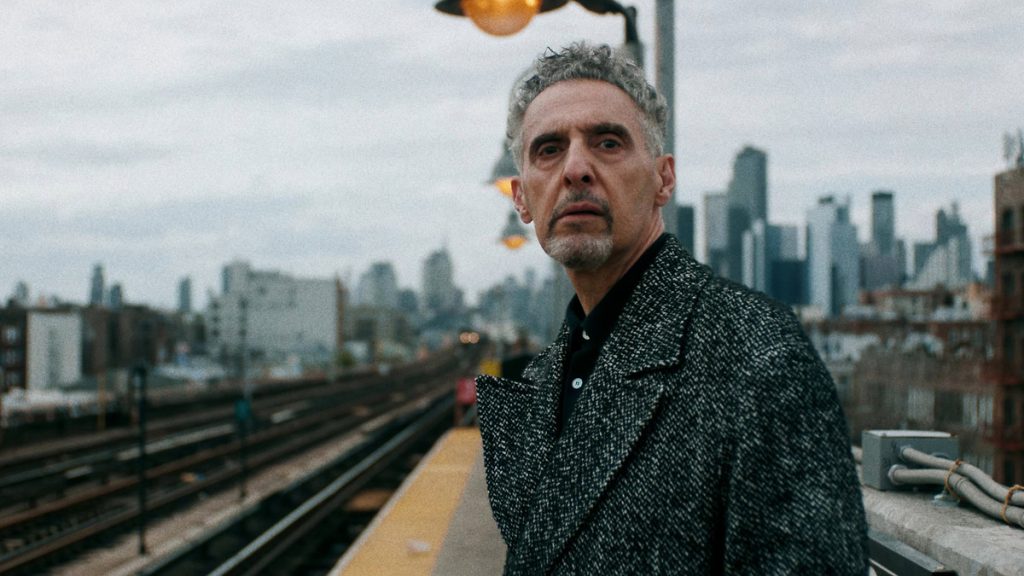
The Only Living Pickpocket in New York
A beautifully tragic love letter to New York and the search for redemption


 4 Nov 2026
 Russ Matthews
There are films that capture the essence of a city, and then there are those that seem to become part of its very soul. New York has provided the backdrop for countless cinematic adventures, from the romance of When Harry Met Sally to the darker streets of Taxi Driver. Yet there is something particularly special about a filmmaker who understands that the city itself can become one of the most important characters in a story. Writer-director Noah Segan delivers precisely this experience with The Only Living Pickpocket in New York, a beautifully tragic and surprisingly tender ode to a city that has changed dramatically while somehow remaining unmistakably itself.
At the centre of this story is John Turturro, delivering what may be one of the defining performances of his remarkable career. Yet even his extraordinary work is almost overshadowed by the film’s affection for New York, its people and the complicated lives hidden behind the city’s relentless movement. This is a film filled with contradictions. It is tragic yet heartfelt, morally troubling yet strangely beautiful, and occasionally humorous despite the sadness that seems to linger around every corner. And that is precisely what makes it so compelling.
A thief from another era
Harry Lehman (John Turturro) is a professional pickpocket whose best days appear to be behind him. He belongs to a disappearing world where a skilled hand, a carefully chosen target and an understanding of human behaviour could provide a living on the streets of New York. Unfortunately for Harry, the world has moved on. Cash has increasingly given way to credit cards and digital transactions, leaving his particular criminal talents feeling almost as outdated as the city he remembers. Yet Harry continues to work, navigating the streets and familiar neighbourhoods with the confidence of someone who has spent a lifetime learning how to survive.
His motivation is not simply financial. At home, he cares for his severely disabled wife, Rosie (Karina Arroyave), whose needs provide a glimpse into a very different side of his character. There is a tenderness in these moments that seems almost incompatible with the man we encounter elsewhere. Harry is a thief, a manipulator and someone whose moral compass has long since become unreliable. Yet his devotion to Rosie reveals a capacity for love that complicates our judgement of him.
When he steals something far more valuable than he realises, Harry becomes entangled in a dangerous situation involving people who have little interest in his circumstances or personal struggles. What follows is a journey across New York as he attempts to escape the consequences of his actions. However, don’t expect a conventional crime caper. Despite its premise, this is less a story about an elaborate theft than a character study of a man who has spent his life taking from others and may finally be forced to consider what remains of his own humanity.
John Turturro at his finest
There is no escaping the fact that this film belongs to John Turturro. From the opening moments until the final scenes, he commands the screen with a performance that is beautifully understated and deeply affecting. Turturro has always possessed an extraordinary ability to portray characters who exist on the fringes of society. He can make an audience uncomfortable, amused and sympathetic, sometimes within the same scene. Here, he brings all those qualities together.
Harry is not an especially likeable man. In fact, there are moments when it becomes almost impossible to justify his decisions or behaviour. He lacks a consistent moral centre, and much of what he does throughout the film would ordinarily make him someone audiences would happily see brought to justice. Yet Turturro refuses to allow us the comfort of such a simple response. His portrayal reveals a man who is exhausted by life, shaped by his environment and increasingly aware that the world he understands is disappearing.
There is something profoundly sad about watching Harry attempt to maintain control over a life that seems determined to slip through his fingers. And then there are those moments with Rosie. Without excusing his actions, the film allows us to see a man who is capable of genuine devotion and sacrifice. It is this contradiction that makes the character so fascinating. We are never entirely sure whether we should be cheering for Harry, condemning him or simply hoping that he might discover something better before his story reaches its conclusion.
Turturro manages to keep all three possibilities alive. It is a remarkable achievement and a performance worthy of serious recognition.
New York is more than a backdrop
If Turturro provides the film’s emotional centre, New York provides its beating heart. Noah Segan clearly loves this city. Not merely the famous landmarks or familiar cinematic locations, but the streets, neighbourhoods, businesses and people who give New York its extraordinary personality. There is a nostalgic quality to the filmmaking that recalls an earlier era of American cinema, when stories could unfold through ordinary conversations and encounters without the need for constant action or elaborate spectacle.
The city feels lived in rather than manufactured. Harry moves through a world that seems both familiar and increasingly foreign to him. The New York he remembers is slowly disappearing, replaced by a society where technology, money and changing relationships have altered the way people interact. Yet the film never becomes a simple complaint about modern life. Instead, there is an underlying affection for a city that continues to evolve while carrying the memories of those who have called it home.
Segan captures this beautifully. The streets become a reflection of Harry himself: weathered, complicated, occasionally unpleasant, yet filled with stories that deserve to be heard. There is a subtle tragedy in watching a man who has survived by understanding his surroundings discover that those surroundings no longer operate according to the rules he knows. And perhaps that is one of the film’s most poignant observations. Sometimes, the world moves on without asking whether we are ready to follow.
A remarkable supporting cast
While Turturro dominates the film, he is surrounded by a wonderfully assembled supporting cast. Giancarlo Esposito, Steve Buscemi and Tatiana Maslany each bring an understated quality to their performances, demonstrating that memorable characters do not necessarily require extensive screen time. Esposito is particularly effective as Detective Warren, bringing his familiar authority and controlled presence to the proceedings.
Buscemi seems perfectly at home in this cinematic world. There is something reassuring about seeing him in a New York story filled with morally complicated characters and the understated humour that has characterised so much of his career. Maslany also makes the most of her role, contributing to a film where even the smaller characters feel as though they belong to a much larger world.
What impressed me was how naturally these performances complemented Turturro. Nobody seems interested in stealing the spotlight. Instead, the ensemble works together to create a believable community of people whose lives occasionally intersect with Harry’s increasingly troubled existence. The casting feels almost effortless. Every actor seems perfectly placed, regardless of how much time they spend on screen. It is one of the film’s quiet triumphs.
A tragedy disguised as a crime story
One of the more intriguing aspects of The Only Living Pickpocket in New York is how it continually challenges our expectations. The premise suggests a crime thriller, perhaps even an entertaining caper involving a clever criminal attempting to outwit more dangerous opponents. There are certainly moments of suspense, along with quiet twists and turns. Yet the film is far more interested in the consequences of Harry’s life than in the mechanics of his criminal activities.
This is a story about regret, responsibility and the possibility of redemption. Harry is not a misunderstood hero whose actions can easily be justified by difficult circumstances. He has made choices that have harmed others, and his willingness to care for Rosie does not somehow erase the moral consequences of his behaviour. That is what makes the story so refreshingly honest.
Too often, films attempt to redeem morally compromised characters by revealing one sympathetic quality, as though a single act of kindness can outweigh a lifetime of wrongdoing. Segan resists that temptation. Harry remains complicated. His love for his wife is genuine, but so are his failures. His circumstances invite compassion, but they do not automatically excuse his decisions.
The film leaves us wrestling with whether someone like Harry deserves redemption, or whether redemption is even possible for a man who has spent so much of his life operating outside the boundaries of what is right. There is a beautifully tragic subtlety to the way this unfolds. The emotional moments are rarely overstated, and the film trusts its audience to recognise the significance of small gestures and difficult decisions. It is compelling cinema, precisely because it refuses to provide comfortable answers.
The bottom line
The Only Living Pickpocket in New York is a marvellous piece of filmmaking. Noah Segan has created a deeply affectionate portrait of New York while delivering a character study that is tragic, heartfelt and morally ambiguous. John Turturro gives a career-defining performance, supported by an outstanding ensemble that includes Giancarlo Esposito, Steve Buscemi and Tatiana Maslany.
Yet the film’s greatest achievement may be its willingness to leave audiences emotionally unsettled. Harry Lehman is not a man we can easily admire. Nevertheless, there is something undeniably moving about watching him confront a world that has passed him by while quietly yearning for something resembling redemption.
This is not a film that relies on spectacle or dramatic twists to make its mark. Instead, it finds its beauty in the brokenness of its characters and the streets of a city that continues to embrace them. A beautifully tragic love letter to New York, anchored by one of John Turturro’s finest performances, and a reminder that some of cinema’s most memorable characters are those we are never quite sure we should love.
REEL DIALOGUE: Can We Truly Make Up for Our Past Through Our Own Actions?
There is something fascinating about characters who make us question our understanding of right and wrong. Harry Lehman is certainly one of them. Throughout The Only Living Pickpocket in New York, we encounter a man whose actions are difficult to defend. He steals, manipulates and operates according to a moral code that seems largely designed to suit his own circumstances. Yet we also witness his devotion to Rosie. His willingness to care for his wife reveals a tenderness that seems almost impossible to reconcile with the rest of his life.
And this raises a question that extends well beyond the cinema. Can we truly make up for our past through our own actions?
It is tempting to believe that life operates according to a moral balancing system. If we have done something wrong, perhaps enough good deeds can eventually outweigh our failures. We might hope that generosity can compensate for selfishness, kindness can erase cruelty or devotion to one person can somehow excuse the harm we have caused to others. It is an appealing idea. After all, most of us would prefer to believe that we can repair our moral standing through our own efforts.
Yet the Bible presents a very different understanding of redemption. In Romans 3:23, the Apostle Paul writes:
“For all have sinned and fall short of the glory of God.” (ESV)
This is not simply a statement about people who have committed obvious crimes or made particularly destructive decisions. It is a reminder that every one of us has fallen short of God’s perfect standard. We may not share Harry’s particular failures, but we all know what it means to make choices we regret, hurt people we love or place our own interests above the needs of others.
The uncomfortable truth is that even our best actions cannot undo the reality of our past. Of course, this does not mean our choices are unimportant. Making amends, seeking forgiveness, accepting responsibility and changing our behaviour are essential parts of responding to the harm we have caused. Yet there is a difference between attempting to repair the consequences of our actions and believing we can somehow earn our own salvation.
Ephesians 2:8–9 explains:
“For by grace you have been saved through faith. And this is not your own doing; it is the gift of God, not a result of works, so that no one may boast.” (ESV)
At the heart of Christianity is the extraordinary claim that redemption is not something we achieve through accumulating enough good deeds. It is something we receive through the grace of Jesus Christ. This is what makes the Christian understanding of forgiveness so remarkable. God does not simply overlook our wrongdoing or pretend that our failures never happened. Instead, Christians believe that Jesus willingly took upon Himself the consequences of sin through His death on the cross, making reconciliation with God possible.
Redemption is not about proving that we deserve a second chance. It is about receiving a gift we could never earn. And that changes how we understand the possibility of a new beginning.
In Luke 19, we meet Zacchaeus, a tax collector whose wealth had been built within a system associated with exploitation and dishonesty. When Jesus enters his life, Zacchaeus responds by committing to generosity and making restitution to those he has wronged. His actions matter, but they are the response to an encounter with grace, not the price he pays to purchase it.
There is an important distinction here. True redemption does not make our past irrelevant, nor does it remove the responsibility to make things right wherever possible. Rather, it provides the foundation for genuine transformation. We no longer need to imagine that our lives are defined entirely by our worst decisions. Nor do we need to pretend that our occasional good deeds somehow cancel out everything we have done wrong.
For Harry Lehman, the question of redemption remains a complicated and deeply personal struggle. For audiences, it becomes an invitation to consider something equally confronting. Perhaps the greatest hope for people like Harry, and indeed for all of us, is not found in our ability to make up for the past. Perhaps it is found in the possibility that forgiveness and a new beginning can be offered even when we do not deserve them.
The conversation starter: If our good deeds cannot erase the wrongs of our past, where can we find genuine forgiveness, and what would it mean to accept redemption as a gift rather than something we have earned?

Reel Dialogue has entered the world of YouVersion: Download the app, dive into the plans, and engage with the Bible in a fresh and exciting way.
Reel Dialogue has entered the world of YouVersion: Download the app, dive into the plans, and engage.


