Jimmy
Behind the Hollywood Legend Lies an Extraordinary Human Story


 6 Nov 2026
 Russ Matthews
For generations of film lovers, Jimmy Stewart has represented something rather special about the golden age of Hollywood. With his unmistakable voice, awkward charm and extraordinary ability to portray ordinary men facing extraordinary circumstances, Stewart became one of cinema's most beloved leading actors. From Mr. Smith Goes to Washington to Rear Window and It's a Wonderful Life, his performances continue to resonate with audiences long after their original release. Yet behind the familiar face and gentle screen persona was a man whose experiences during the Second World War would profoundly shape the remainder of his life.
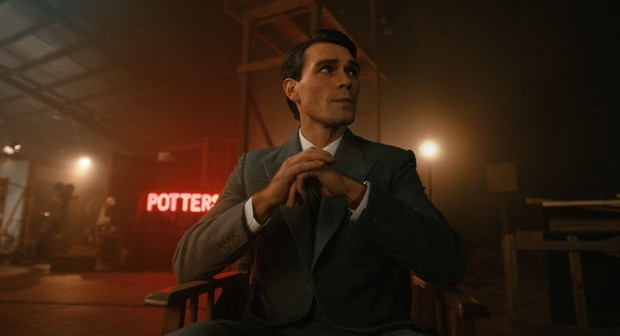
Director Aaron Burns explores this lesser-known chapter in Jimmy, with KJ Apa stepping into the shoes of the legendary actor in a biographical drama that connects the horrors of war with the making of one of the most treasured films in cinematic history. It is a story that invites audiences to look beyond the Hollywood legend and discover the man behind the performances.
The Story
Jimmy follows the extraordinary journey of James Stewart (Apa), beginning at the height of his Hollywood success following his Academy Award-winning performance in The Philadelphia Story. With his acting career flourishing, Stewart makes the unexpected decision to leave the comforts of Hollywood and enlist in the United States Army Air Corps during the Second World War. Rather than accepting a safe public relations role, he pursues active military service, eventually becoming a combat pilot and flying dangerous bombing missions over Europe.
However, the experiences of war leave an emotional burden that follows him home, making his return to civilian life and the film industry far more difficult than anyone might have anticipated. As Stewart struggles to reconcile the horrors he has witnessed with the expectations of his former life, an opportunity emerges through his friendship with director Frank Capra (Max Casella). The role of George Bailey in It’s a Wonderful Life offers the possibility of rediscovering purpose, hope and perhaps a pathway towards healing. What emerges is the story of a celebrated actor whose greatest cinematic achievement may have been shaped by the most difficult experiences of his personal life.
Discovering the Man Behind the Legend
Angel Studios has delivered some of its strongest productions by drawing upon true-life dramas and bringing some of the world’s most compelling human-interest stories to the screen. There is something particularly appealing about films that invite audiences to discover the extraordinary experiences of seemingly ordinary people, or, in this case, the humanity behind one of Hollywood’s most recognisable personalities.
Jimmy finds its greatest strength in the quality of its central character and the genuine affection the filmmakers appear to have for Jimmy Stewart. He remains a fascinating figure in cinematic history, not merely because of his remarkable acting career, but because he represents something of a rarity within the Hollywood landscape. His willingness to step away from fame and success to serve his country, along with the personal struggles that followed, reveals a man whose life was far more complicated than his familiar screen persona might suggest.
Of course, bringing such an iconic figure to the screen comes with considerable risks. There is always the danger of reducing a beloved personality to a caricature, relying upon familiar mannerisms, vocal impressions and nostalgic references rather than developing a believable human being. Yet Jimmy seems to recognise this challenge, looking beyond the Hollywood legend to explore the individual who existed behind the performances and this is where KJ Apa deserves particular recognition.
KJ Apa becomes Jimmy Stewart
KJ Apa delivers what may well be the performance of his career. Admittedly, during the opening stages, his attempts to capture Stewart’s distinctive voice, mannerisms and familiar screen presence can feel a little forced. There are moments when it seems as though we are watching an actor attempting to impersonate a Hollywood legend rather than inhabit the character. Yet something rather remarkable happens as the story unfolds. Apa gradually seems to move beyond the imitation and genuinely becomes Jimmy Stewart.
The familiar mannerisms no longer dominate the performance, and the actor begins to reveal the humanity beneath the recognisable personality. What initially feels somewhat put upon develops into a portrayal filled with emotional depth, vulnerability and genuine affection for the man being represented. It is an impressive transformation, particularly when considering the challenge of portraying someone whose voice, appearance and cinematic legacy remain so deeply embedded in popular culture. Rather than simply reminding us of the Stewart we remember from the screen, Apa invites us to consider the man who existed when the cameras were no longer rolling.
As the biographical account of Stewart’s wartime service comes to life, the film begins to reveal the personal cost of his experiences. Here was a man who had enjoyed extraordinary success in a world of imagination and glamour, only to find himself confronted by the brutal realities of war. The contrast between these two worlds becomes one of the film’s most compelling elements.
There is something profoundly moving about watching this celebrated actor confront experiences that no amount of Hollywood success could have prepared him for. His life would never be quite the same, and neither would his career.
When Life Changes the Actor
One of the most fascinating aspects of Jimmy is its exploration of how Stewart’s experiences during the Second World War may have influenced his work after returning to Hollywood. Before the war, he was already an exceptional actor with an Academy Award and a collection of memorable performances to his name. Yet there is a compelling argument that his later work revealed a different emotional depth, shaped by experiences that had fundamentally altered his understanding of life.
The film finds its emotional high point in the making of It’s a Wonderful Life, where Stewart’s personal struggles and the story of George Bailey seem to intersect in a particularly meaningful way. There is almost a sense of catharsis as the actor steps into the role of a man who has lost sight of his own worth and must rediscover the significance of his life.
For those familiar with Frank Capra’s beloved Christmas classic, these moments carry an additional emotional weight. George Bailey has become one of cinema’s most enduring characters precisely because his struggles feel so recognisably human. He is a man filled with dreams, disappointments, frustrations and sacrifices, yet his story ultimately reminds us that an ordinary life can have extraordinary significance.
Watching Jimmy, it is difficult not to consider how Stewart’s own experiences may have contributed to the emotional authenticity of that performance. The film suggests that the actor who returned from war was not simply the same Hollywood star resuming his career, but a man whose understanding of suffering, responsibility and hope had been profoundly transformed.
And perhaps this is where the film offers its most meaningful insight. Stewart spent his early career working within a world built upon imagination and glamour. Yet after experiencing the realities of war, he seemed to become a man who understood life in a far more personal and confronting way. That humanity became increasingly evident on screen, contributing to performances that continue to resonate with audiences decades later.
A Heartfelt Chapter in a Remarkable Life
Naturally, a film covering such a relatively short period cannot possibly capture everything audiences might want to know about Jimmy Stewart. His career extended across decades, encompassing extraordinary collaborations, personal relationships and some of the most significant films in Hollywood history. Those hoping for a comprehensive account of his life may find themselves wishing the filmmakers had explored more of his remarkable journey. Yet there is something to appreciate about the decision to concentrate upon this particular turning point rather than attempting to squeeze an entire lifetime into a single production.
By focusing on Stewart’s wartime experiences and his eventual return to filmmaking, Jimmy provides a more intimate portrait of a man whose personal struggles helped shape the direction of his career. The result is a heartfelt examination of sacrifice, suffering and the possibility of rediscovering purpose when life no longer resembles the future we once imagined.
There is also an unmistakable affection for Stewart woven throughout the production. The filmmakers clearly admire their subject, and that admiration becomes one of the film’s most endearing qualities. As with any biographical drama, audiences should recognise that cinematic storytelling inevitably involves interpretation and dramatic reconstruction. The hope is that these creative decisions remain faithful to the essential truths of the man and his experiences.
What emerges is not merely a celebration of a Hollywood icon, but an invitation to consider the humanity behind the legend.
The Bottom Line
Jimmy is a heartfelt and compelling biographical drama that explores one of the most significant turning points in the life of a Hollywood legend. Angel Studios continues to demonstrate the potential of bringing remarkable true-life stories to the screen, and this production finds its greatest strength in its affection for Jimmy Stewart and its willingness to look beyond his familiar public persona.
KJ Apa delivers a career-defining performance, gradually moving beyond the initial challenge of portraying such a recognisable figure to reveal the emotional complexity of a man forever changed by war. The film may not provide a comprehensive portrait of Stewart’s extraordinary life, but its focused exploration of his wartime experiences and the making of It’s a Wonderful Life offers a moving perspective on the relationship between personal suffering and artistic expression.
For those who have grown up loving Stewart’s films, this is an opportunity to discover another side of the man behind George Bailey. For younger audiences, it provides an introduction to a remarkable individual whose influence continues to shape cinema.
Ultimately, Jimmy reminds us that some of life’s most significant transformations emerge from experiences we would never have chosen for ourselves. Stewart was already an exceptional actor before the war, but the man who returned carried an understanding of life that seemed to give his later performances an extraordinary depth. A fitting tribute to a Hollywood legend, and a reminder that behind even the most familiar faces are stories of sacrifice, suffering and hope.
REEL DIALOGUE: Where Do We Find Hope When Life No Longer Looks the Way We Imagined?
There is something fascinating about the way life can change our understanding of who we are and what truly matters. For Jimmy Stewart, the world of Hollywood offered extraordinary opportunities. He had achieved success, gained recognition and established himself as one of the most promising actors of his generation. His future appeared secure, filled with the possibilities that came from working within the glamorous world of cinema. Yet the Second World War changed everything.
Rather than remaining within the familiar surroundings of Hollywood, Stewart entered a world defined by danger, suffering and the painful realities of human conflict. The experiences he encountered would challenge his understanding of life and leave him facing questions that fame and success could never adequately answer. And this raises a question that extends well beyond the life of a celebrated actor.
Where do we find hope when life no longer looks the way we imagined?
Most of us begin life with certain expectations. We imagine careers, relationships, families and futures that seem filled with possibility. We make plans, pursue dreams and hope that the years ahead will unfold in ways that bring fulfilment and happiness. Yet life rarely follows the script we would have written for ourselves.
Sometimes, circumstances beyond our control change everything. Illness, disappointment, loss, conflict or unexpected responsibilities can leave us wondering what happened to the future we once imagined. For Stewart, returning from war meant confronting a world that appeared familiar but no longer felt quite the same. The circumstances around him may have returned to something resembling normality, but the man who had experienced the horrors of war was no longer the same person who had left Hollywood.
There is something deeply relatable about this experience. We may return to familiar places, relationships or responsibilities after a difficult season, only to discover that our perspective has fundamentally changed. The Bible acknowledges that suffering is an unavoidable part of life, but it also offers the extraordinary possibility that our most difficult experiences need not be without purpose.
In Romans 5:3–5, the Apostle Paul writes:
“Suffering produces perseverance; perseverance, character; and character, hope. And hope does not put us to shame.” (NIV)
These words are not an invitation to celebrate suffering or pretend that painful experiences are somehow enjoyable. Rather, they remind us that even within life’s most challenging circumstances, God can be at work shaping our character and developing a hope that extends beyond our immediate situation.
This is particularly meaningful when we consider the relationship between Stewart’s personal experiences and his portrayal of George Bailey in It’s a Wonderful Life. George is a man whose dreams have not unfolded as he imagined. Throughout the film, he makes sacrifices, encounters disappointment and eventually reaches a point where he questions whether his life has any significance at all. Yet the beauty of his story is found in the gradual discovery that his life has mattered in ways he could never have fully understood.
The people he has loved, the sacrifices he has made and the ordinary moments of kindness that seemed insignificant have all contributed to something far greater than his personal ambitions. For Christians, this reflects an important biblical truth. Our worth is not ultimately determined by our achievements, our careers or whether life has unfolded according to our expectations. Instead, Scripture reminds us that our value is grounded in being created and loved by God.
Psalm 139:13–14 describes the extraordinary care with which God has made each of us, reminding us that our lives possess dignity and significance long before we accomplish anything the world might consider remarkable. And when our circumstances change, that value does not disappear. In fact, some of the most meaningful chapters of our lives may emerge through experiences we would never have chosen.
This does not mean every tragedy will lead to an obvious blessing or that suffering automatically produces a better future. Such assurances can feel painfully inadequate to those experiencing genuine loss. Yet Christianity offers a hope that reaches beyond the promise of improved circumstances. It is the hope that God remains present even when life becomes uncertain, that our suffering does not place us beyond His care and that our story is not necessarily finished simply because it has taken an unexpected turn.
Jimmy Stewart worked in a world built upon imagination, glamour and carefully constructed stories. Yet the experiences of war confronted him with a reality that could never be contained within a Hollywood script. Perhaps one of the most moving aspects of his journey is the suggestion that these experiences helped him become not merely a more accomplished actor, but a man whose understanding of humanity had grown deeper. And that humanity became evident in the characters he portrayed.
Jimmy invites us to consider how our own difficult experiences might shape the people we become. Not because suffering is desirable, but because even in the midst of life’s unexpected changes, there remains the possibility of discovering purpose, compassion and hope.
Perhaps the greatest stories are not always those that unfold according to our original plans, but those in which we discover that our lives still have meaning even when everything changes.
The conversation starter: When life takes an unexpected turn and our dreams no longer seem possible, where do we look for hope, and how might our most difficult experiences shape the people we become?

Reel Dialogue has entered the world of YouVersion: Download the app, dive into the plans, and engage with the Bible in a fresh and exciting way.
Reel Dialogue has entered the world of YouVersion: Download the app, dive into the plans, and engage.

About Russ Matthews


More Films like this
View All