Way of the Warrior Kid


 29 Nov 2026
 Russ Matthews
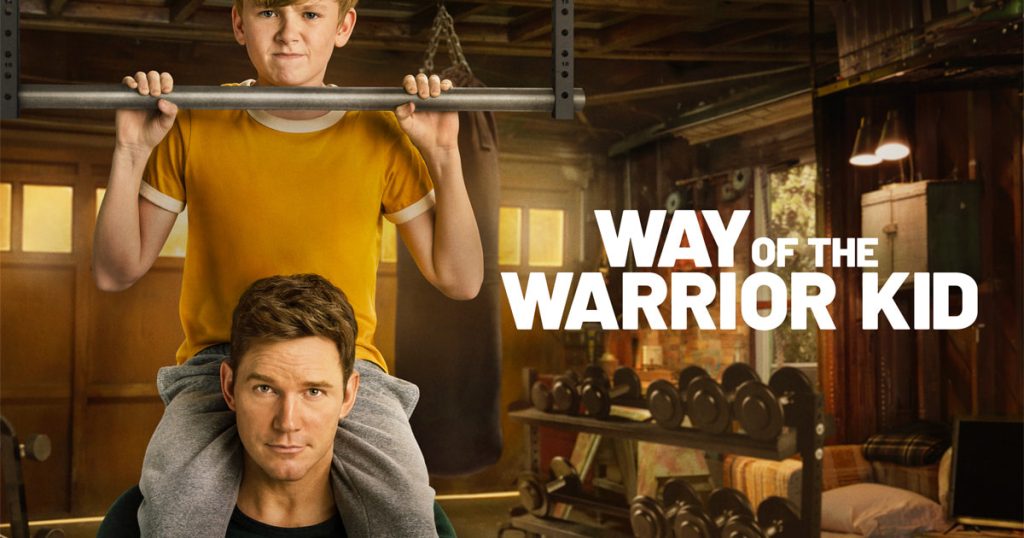
Ever since Mr Miyagi introduced Daniel LaRusso to the finer points of waxing cars and painting fences in The Karate Kid, cinema has regularly returned to the value of having someone invest in the life of a young person. Yet, in an era when bullying extends beyond the schoolyard and young people are increasingly exposed to unrealistic expectations of who they should be, these stories arguably have a renewed significance. Based on the bestselling novel by former Navy SEAL Jocko Willink, Way of the Warrior Kid sees director McG (Charlie's Angels, Terminator Salvation) exchange his usual action-oriented canvas for a more personal adventure. With Chris Pratt stepping into the role of mentor and Jude Hill (Belfast) providing the youthful perspective, the question is whether this Apple Original Film can offer something more substantial than the familiar Hollywood formula of believing in yourself and standing up to the school bully.
For young Marc (Jude Hill), school has become a daily exercise in discovering his inadequacies. Whether in the classroom, on the sporting field or amongst his peers, the youngster struggles to find his confidence and regularly finds himself on the receiving end of bullying. Things begin to change when his Uncle Jake (Chris Pratt), a Navy SEAL recovering from an injury, comes to spend the summer with Marc and his mother, Sarah (Linda Cardellini). Drawing on his military experience, Jake develops a training programme designed to equip his nephew with the discipline and confidence needed to face his fears. Yet, as the summer progresses, the challenges confronting both uncle and nephew prove to have less to do with physical strength and considerably more to do with the courage needed to confront their inner struggles.
There is little to fault in the messaging throughout Way of the Warrior Kid, and the characters are appealing enough to draw audiences into their respective journeys. Yet, as the story unfolds, it begins to feel reminiscent of those afternoon television specials that attempted to teach young viewers valuable lessons about bullying, self-confidence and rising above their circumstances. All of these are admirable and worthwhile pursuits, but there comes a point when the messaging begins to overshadow the storytelling.
It is refreshing to see Chris Pratt in something so decidedly wholesome. The actor brings his natural charisma to the role of Uncle Jake, and there is much to appreciate in his character’s willingness to invest in the life of his nephew. The emphasis on personal responsibility, discipline and the importance of overcoming our fears provides a welcome alternative to some of the messaging directed towards young people today. Still, the filmmakers seem so determined to deliver a clean-cut family adventure that much of the messiness of real life gets lost along the way.
Having loved Jude Hill’s performance in Kenneth Branagh’s Belfast, it is wonderful to see the young actor continue to develop his craft. Interestingly, one of the challenges with his casting is that Hill is such a naturally appealing young performer that the screenplay struggles to convince us of the extent of Marc’s social isolation and insecurities. Certainly, outward appearances are no indication of the internal battles someone may be experiencing, but the filmmakers could have done more to establish the vulnerability that is so essential to his character’s transformation.
The greatest challenge for McG’s production comes as the narrative builds towards its crescendo. What begins as a relatively grounded exploration of the relationship between an uncle and his nephew eventually ventures into increasingly far-fetched territory. The circumstances surrounding the conclusion become so contrived that they inadvertently detract from the very lessons the filmmakers have spent much of the running time trying to communicate. Sometimes, the smaller victories in life can be considerably more inspirational than the grandiose moments Hollywood feels compelled to deliver.
Nevertheless, it is difficult to fault Apple for attempting to provide families with something that offers a positive message about courage, personal development and the importance of investing in the next generation. There is an audience yearning for entertainment that families can enjoy together and that provides opportunities for meaningful conversations afterwards.
Ultimately, Way of the Warrior Kid is not a bad film, but one that becomes a victim of its own good intentions. In its determination to deliver something wholesome and inspirational, it sacrifices much of the authenticity needed to make its message resonate. Audiences may struggle to take some of the proceedings seriously, but there is enough warmth in the characters and merit in their journey to have most viewers cheering for all involved by the end.
REEL DIALOGUE: Every Young Warrior Needs a Mentor
Who was the person who invested in your life when you were growing up?
For some, it may have been a parent or grandparent, while for others it might have been a teacher, sporting coach, youth leader or someone within their church. Regardless of the relationship, many of us can look back on someone who saw potential in us long before we recognised it in ourselves.
One of the most admirable aspects of Way of the Warrior Kid is that Uncle Jake’s investment in his nephew goes beyond teaching him how to defend himself. There is a significant difference between equipping someone to win a fight and preparing them to face the challenges of life.
This concept of one generation investing in the next is woven throughout the biblical narrative. Moses invested in Joshua, Elijah mentored Elisha, and the apostle Paul developed a meaningful relationship with a young man named Timothy.
Paul’s words to Timothy provide a particularly fitting connection to this film:
For the Spirit God gave us does not make us timid, but gives us power, love and self-discipline. — 2 Timothy 1:7
Notice how Paul brings together strength, love and self-discipline. The biblical understanding of courage is not merely the ability to overpower those who oppose us. True strength involves exercising self-control, demonstrating compassion and finding the courage to do what is right, even when it comes at a personal cost.
Yet, unlike the neatly packaged conclusions of Hollywood productions, the challenges of life are rarely resolved within the confines of a summer holiday. There will be setbacks, disappointments and circumstances that remain beyond our control. While discipline and perseverance have their place, our ultimate security and identity are not dependent upon our achievements or our ability to overcome every obstacle. They are found in our relationship with God through Jesus Christ.
Perhaps the challenge for those of us who have travelled a little further along life’s journey is to consider who we are investing in today. We need not have all the answers or have overcome every challenge ourselves to make a meaningful difference in the life of another person.
Sometimes, the most significant contribution we can make to the next generation is simply being willing to walk alongside them, especially when life doesn’t deliver a Hollywood ending.
Questions worth discussing:
- Who has invested in your life, and whose life are you investing in? (2 Timothy 2:2)
- What is the difference between physical strength and true courage? (2 Timothy 1:7)
- Where do we find our strength when life’s circumstances do not improve? (2 Corinthians 12:9–10)

Reel Dialogue has entered the world of YouVersion: Download the app, dive into the plans, and engage with the Bible in a fresh and exciting way.
Reel Dialogue has entered the world of YouVersion: Download the app, dive into the plans, and engage.


