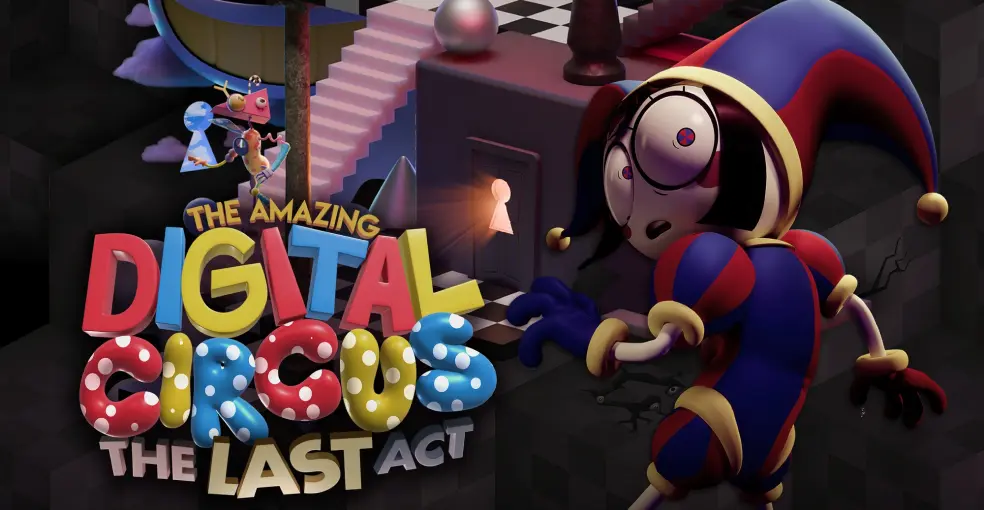
The Amazing Digital Circus: The Last Act
A colourful, black comedy about identity, friendship and Artificial intelligence


 10 Jun 2026
  Amy Isham
 Created by GooseWorx in collaboration with Australian animation company Glitch Productions, TADC is described as “a surreal psychological comedy about a bunch of cute cartoon characters that hate their lives and want to leave.” Beneath its colourful exterior lies a surprisingly dark and thoughtful exploration of identity, purpose and survival.
The Amazing Digital Circus (TADC) has captured the imagination of the tween and teen market through its gradual release on YouTube over the past three years. With episodes one to eight now available on Netflix, episodes eight and nine have received a theatrical release under the banner The Amazing Digital Circus: The Last Act. The film earned more than $35 million worldwide in its opening weekend, placing third at the global box office and outperforming The Mandalorian and Grogu.
The series is loosely reminiscent of Harlan Ellison’s 1967 short story I Have No Mouth, and I Must Scream, which imagines an artificial intelligence tormenting the last survivors of humanity. While TADC explores similar existential themes, it wraps them in vibrant visuals, humour and inventive storytelling. The animation is a superb blend of 3D and 2D techniques that effectively communicate character, emotion and mood. Combined with strong voice performances and carefully crafted narratives, the result is both entertaining and emotionally engaging.
For newcomers, The Last Act may feel somewhat disorientating without knowledge of the previous episodes. Fortunately, I had recently watched the series with my teenage children, making it easier to appreciate the significance of the events unfolding on screen. The passionate fanbase was impossible to miss at our local cinema, with handmade costumes, official merchandise and enthusiastic audience reactions creating a genuine sense of community. While the excitement did not quite reach the levels I witnessed during the Twilight phenomenon, it came surprisingly close.
For those unfamiliar with the story, TADC follows a group of individuals trapped inside a digital circus overseen by an artificial intelligence named Caine. His behaviour ranges from amusingly oblivious to genuinely unsettling throughout the series. The trapped characters have forgotten their real names and identities, retaining only vague memories of putting on a mysterious headset before arriving in this world. Among them are Kinger, a chess piece; Ragatha, a rag doll; Zooble, an abstract toy; Gangle, a ribbon adorned with comedy and tragedy masks; Jax, a purple rabbit; and Pomni, a court jester who serves as the audience’s entry point into the story.
A constant threat within the circus is “abstraction”, a terrifying transformation that occurs when characters lose hope or become consumed by their desire to escape. The arrival of Pomni in the first episode coincides with the abstraction of Kaufmo, a once-cheerful clown whose fate serves as a warning to everyone else. By episode eight, Jax appears increasingly vulnerable to the same fate as he becomes more isolated, hostile and emotionally unstable.
Episodes eight and nine focus heavily on the characters’ conflicting desires. They long to leave the circus, yet fear losing the friendships they have formed along the way. Their struggles collide with Caine’s own need for affirmation and control, leading to dramatic consequences. The final episode slows the pace considerably, providing long-awaited revelations about the true nature of the circus and how its inhabitants became trapped there in the first place.
TADC is an intense viewing experience. While it contains little traditional horror, the psychological themes and emotional tension may prove overwhelming for younger viewers. I would hesitate to recommend it to children under 14. The ending has already divided fans, with some embracing its conclusions while others remain dissatisfied. There has also been discussion surrounding the character of Jax and questions of gender identity, as well as creator GooseWorx’s personal identification as a trans woman. Families may wish to consider these topics and determine whether they are prepared to engage in conversations that arise from the material.
Despite its darkness, The Amazing Digital Circus ultimately delivers a hopeful message. It is an engrossing mystery that explores self-acceptance, friendship and the courage required to face seemingly impossible circumstances.
REEL DIALOGUE: What makes a true friend?
One of the strongest themes running through The Amazing Digital Circus is friendship. Despite their struggles, fears and personal flaws, the characters continue to rely on one another for support. Even when relationships become strained, they discover that facing hardship alone is often far more difficult than facing it together.
Pomni’s journey highlights this truth. She consistently chooses to care for her friends, even when they push her away. Her concern for Jax is particularly significant, as she refuses to abandon him despite his increasingly difficult behaviour. The series acknowledges that treating others poorly is never acceptable, but it also recognises that people who are hurting often need compassion rather than rejection.
The Bible speaks powerfully about the value of friendship:
“A friend loves at all times, and a brother is born for a time of adversity.” – Proverbs 17:17
True friendship is not measured by convenience or popularity. It is revealed when life becomes difficult. The willingness to stand alongside others during their struggles reflects the kind of love and faithfulness that God demonstrates toward us.
While The Amazing Digital Circus explores these ideas within a bizarre digital world, its message about friendship and perseverance speaks directly to real life.

Reel Dialogue has entered the world of YouVersion: Download the app, dive into the plans, and engage with the Bible in a fresh and exciting way.
Reel Dialogue has entered the world of YouVersion: Download the app, dive into the plans, and engage.

About Amy Isham


More Films like this
View All