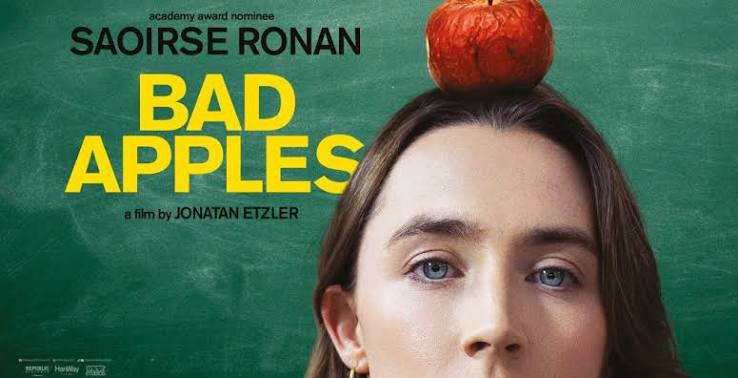
Bad Apples
A darkly twisted classroom dilemma that tests the boundaries of justice, morality and just how far a teacher should go for her students.


 18 Nov 2026
 Russ Matthews
There are few professions that carry the expectations and responsibilities placed upon teachers. Parents entrust them with their children, governments expect results, and communities look to them to shape the next generation. Yet behind classroom doors, many educators face challenges extending far beyond teaching reading, writing and arithmetic. Disruptive behaviour, inadequate resources and limited administrative support can turn even the most passionate teacher's calling into an exhausting exercise in survival. Director Jonatan Etzler takes these frustrations and pushes them into disturbingly uncomfortable territory with Bad Apples, a dark comedy that will leave audiences questioning their own moral convictions.
Then, through a series of unfortunate decisions, Maria accidentally confines Danny in her home. What should be an obvious moral and legal crisis becomes considerably more complicated when something unexpected happens: her classroom begins to flourish without him. The other students are learning, the atmosphere improves, and Maria suddenly appears to be the teacher everyone hoped she would become. Unfortunately, her newfound success depends upon keeping a child imprisoned.
Now there’s a dilemma no teacher-training course could adequately prepare you for.
What makes Bad Apples effective is how Etzler and screenwriter Jess O’Kane gradually draw audiences into Maria’s predicament. Initially, the situation seems straightforward. Kidnapping a child is wrong. Full stop. Yet viewers are confronted with an educational system that has seemingly abandoned its teachers, failed to address dangerous behaviour and allowed the needs of one student to overwhelm an entire classroom.
The film never needs to justify Maria’s actions to make us understand her desperation. Instead, it places audiences in the uncomfortable position of potentially hoping she escapes the consequences of something they know she should never have done.
That is where the film becomes particularly clever.
Ronan is exceptional, balancing compassion, exhaustion, fear and moral confusion. Her Maria is neither a heartless villain nor an innocent victim. She genuinely wants the best for her students, yet increasingly makes decisions that contradict everything her profession should represent. Through subtle expressions and increasingly frantic reactions, Ronan communicates the humanity beneath her extraordinary behaviour.
Young Eddie Waller also deserves credit for portraying Danny as more than simply the classroom troublemaker. His behaviour is frequently appalling, but the film suggests there may be more to his circumstances than initially meets the eye. This introduces another uncomfortable question: while teachers must protect the wider classroom, what responsibility does society have towards the child whose behaviour makes that classroom almost impossible to manage?
Etzler understands that effective satire often emerges from presenting something outrageous within a recognisable reality. The film’s increasingly absurd developments are punctuated by genuine emotional insight, shifting from laughter to discomfort within the same scene. Rather than providing easy answers, the director confidently allows audiences to wrestle with the contradictions.
The supporting characters add another layer to this moral minefield. Administrators, parents and community members all have their own expectations of acceptable behaviour. Yet, as circumstances become more complicated, it becomes apparent that Maria may not be the only bad apple in this community. Personal interests, institutional reputations and convenient outcomes increasingly influence decisions that should prioritise children’s welfare.
Perhaps the film’s most confronting observation concerns our willingness to measure morality by results. If Maria’s classroom improves, does that make her actions acceptable? If the majority benefit from one person’s suffering, can the outcome justify the method? Etzler continually challenges our sympathies as the story develops.
Admittedly, the premise requires audiences to embrace considerable absurdity. Some developments stretch credibility, and its uncomfortable situations may prove too much for those expecting a conventional comedy about teaching. Yet these exaggerations serve the satire. This certainly isn’t an endorsement of kidnapping, but a provocative examination of what happens when desperation, institutional failure and flexible morality collide.
What surprised me most was the heart beneath the darkness. Despite its outrageous premise, Bad Apples genuinely cares about the people caught within this educational quagmire. There is compassion for overwhelmed teachers, concern for neglected children and frustration with systems seemingly better equipped to manage public perception than address genuine problems.
Ultimately, Bad Apples is a sharp, uncomfortable and surprisingly engaging examination of the ethical challenges facing modern education. Ronan delivers a masterful performance, while Etzler constructs a story that continually tests our willingness to excuse wrongdoing when the circumstances appear understandable. This is not a film offering comfortable solutions. Instead, it leaves viewers twisted in knots over questions that initially seemed remarkably straightforward.
And perhaps that is precisely the point.
REEL DIALOGUE: What Would You Do?
One of the most fascinating aspects of Bad Apples is how quickly a straightforward moral question becomes complicated when we identify with the person making the wrong decision.
Most of us would immediately agree that kidnapping a child is unacceptable. Yet the film challenges us to consider how we might respond under relentless pressure, abandoned by those responsible for helping us and convinced that our actions might benefit everyone else.
Would we maintain our convictions, or begin searching for reasons to justify an exception?
This question extends well beyond education. Throughout life, we encounter circumstances where doing the right thing appears considerably more difficult than choosing a convenient alternative. We convince ourselves that our intentions are good, nobody will really be hurt or the eventual outcome will justify our decisions.
Proverbs 14:12 reminds us, “There is a way that appears to be right, but in the end it leads to death.” Sincerity doesn’t necessarily make our choices right, particularly when we begin measuring morality by success rather than principle.
Romans 3:8 similarly challenges the notion that we should do evil so that good may result. Christianity doesn’t teach that noble intentions automatically justify questionable methods. Instead, Scripture calls us to pursue justice while maintaining integrity, compassion and responsibility towards others.
Yet biblical justice also recognises the importance of caring for those struggling within difficult circumstances. Micah 6:8 provides a powerful foundation: to act justly, love mercy and walk humbly with God.
These principles challenge everyone involved in education. Teachers need support, parents must take responsibility, and school leaders should prioritise genuine care over institutional appearances. Equally, children displaying destructive behaviour may themselves be in desperate need of compassion and guidance.
Perhaps the most uncomfortable question is whether we’re prepared to apply the same moral standards to ourselves that we expect from others.
Questions worth discussing:
- If you were in Maria’s situation, what would you do? Would your answer change as the pressure increased? (James 1:19–20)
- Can achieving a good outcome ever justify doing something morally wrong? (Romans 3:8; Proverbs 14:12)
- How should we balance justice, mercy and responsibility when dealing with difficult people? (Micah 6:8; Galatians 6:2)
Bad Apples reminds us that the distinction between right and wrong may be clear, but choosing what is right can become remarkably difficult when emotions, frustrations and personal interests are involved.
The Christian faith calls us to anchor our moral compass in something more dependable than circumstances or desired outcomes. After all, the real test of our convictions is not whether we know what is right when life is easy, but whether we’re willing to do what is right when everything around us makes the alternative seem so appealing.

Reel Dialogue has entered the world of YouVersion: Download the app, dive into the plans, and engage with the Bible in a fresh and exciting way.
Reel Dialogue has entered the world of YouVersion: Download the app, dive into the plans, and engage.

About Russ Matthews


More Films like this
View All