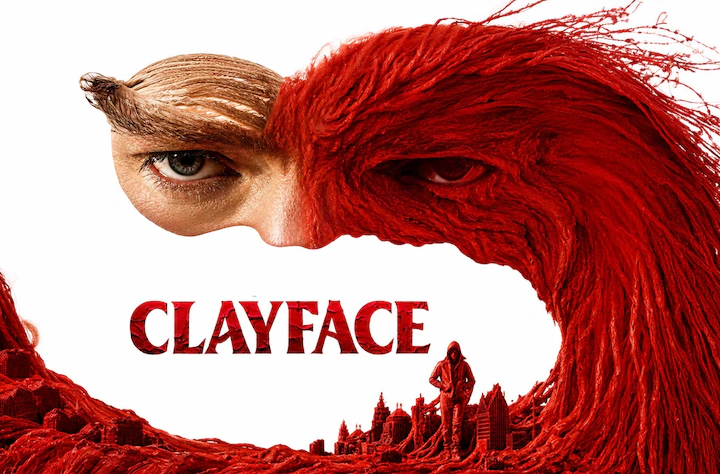
Clayface
A bit of a misshapen lump


 24 Oct 2026
 Michael Walsh
When James Gunn first announced the slate for his new DCU in February 2023, it bore the subtitle Chapter One – Gods and Monsters. But amidst a lineup that included a Superman reboot and a Lanterns TV show, a solo film focusing on one of the Gotham hero’s most monstrous villains—who’d never made it into a live-action film—wasn’t actually amongst them.
However, not long after Gunn took the helm of the universe, writer-director Mike Flanagan pitched a script focusing on the character, which was greenlit and fast-tracked, even beating out the DCU debut of the Caped Crusader he normally fights. But how well does a Clayface film without Batman in it fare?
The film follows up-and-coming actor Matt Hagen (Tom Rhys Harries), who, after spending the night with notorious mob boss Markos Szabo’s (David Dencik) girlfriend, Mia Torrez (Joana Ribeiro), is assaulted and brutally disfigured, ruining his bright career in an instant. Unable to get justice through legal means and desperate to salvage his face and acting ambitions, Matt approaches Dr Caitlyn Corr (Naomi Ackie), whose recent development of a nanocell treatment to heal degenerative disease appeals to the scarred celebrity. However, one overdose pushes Hagen over the edge into his darkest impulses, leading to the birth of one of Gotham’s gooiest gangsters.
Whilst adverts pitched the film as bloody body horror like The Substance, and there are certainly plenty of icky biological bits, the film really is more of a crime drama and revenge thriller. The story is less interested in exploring the monster inside the man than it is in pursuing an increasingly violent revenge quest. The result is a villain origin story in which, by the end, Hagen has shifted completely from a sympathetic star turned scarred loner to a homicidal killer driven purely by selfish gain.
A star-making transformation
The film’s strongest element is Tom Rhys Harries, who delivers a star-making turn as Matt. He’s charismatic, likeable, talented and believable as the chiselled-jawline leading man the film positions him as. And his descent into increasing instability is both compelling and unsettling, giving the character enough humanity that his transformation carries genuine weight.
However, outside of Matt Hagen, the rest of the cast’s characters feel very shallow. One can’t help but wonder if that’s because, unlike Hagen, who has years of comic lore and characterisation to draw upon, everyone else is an original addition to the story.
For a film that is meant to be our first introduction to Gotham City in the new DCU, there’s not even a background billboard with a Wayne Enterprises logo or a name-drop of any recognisable characters. It feels somewhat similar to the Sony universe of Spider-Man-adjacent comic villains turned movie antiheroes, but even those films had more comic references and world-building.
Who is this for?
Furthermore, Gunn’s DCU has continued to lean into the darker, more adult tone that DC has been known for, and Clayface is certainly a mature film, with language, nudity and violence. In those respects, it shares far more in common with horror films than comic book movies, and one can’t help but wonder who the intended audience is.
Is it for Batman fans? Because he’s not in it. Is it for horror fans? Despite its grotesque imagery, the film is neither particularly frightening nor consistently gory.
All that being said, the film itself is perfectly watchable and even quite well made. The prosthetic effects work is especially impressive, whilst the editing and visual effects are utilised well to sell this shapeshifting story. And Tom Rhys Harries is, as mentioned, fantastic.
However, no amount of talent and production value can fully redeem a fairly shallow script in this oddly isolated third cinematic entry for the new DCU.
REEL DIALOGUE: Transformation that is only skin deep
Clayface is a story about identity, vanity and the lengths one will go to reclaim that which they believe they have lost. Matt Hagen’s disfigurement is more than a physical tragedy, as it threatens the very foundation of his identity, which is built upon his appearance, talent and the promise of a successful career. But in trying to restore his former self, Matt becomes increasingly willing to sacrifice his humanity, until the pursuit of justice gives way to something monstrous.
From a Christian perspective, Matt’s story offers a sobering reminder that our attempts to reclaim control, secure our worth or avenge our suffering can become destructive when they become ultimate pursuits. The Bible locates human dignity not in our appearance, achievements or the approval of others, but in our creation in the image of God (Genesis 1:27). And while injustice deserves to be confronted, vengeance is not ours to wield (Romans 12:19).
Ultimately, Clayface gestures towards a powerful exploration of the difference between outward restoration and inward transformation. Matt can change his face, but he cannot heal the brokenness driving him. It is only Jesus who can fully and truly transform our inner being.
“Therefore, if anyone is in Christ, he is a new creation. The old has passed away; behold, the new has come.” — 2 Corinthians 5:17 (ESV)

Reel Dialogue has entered the world of YouVersion: Download the app, dive into the plans, and engage with the Bible in a fresh and exciting way.
Reel Dialogue has entered the world of YouVersion: Download the app, dive into the plans, and engage.