Resident Evil
Raccoon City is infected again. This time, it’s actually fun.


 20 Sep 2026
  Juliana Purnell
 Resident Evil is a prominent, mainstay horror video game franchise, spanning eleven core titles (up to sixty if including spin-offs, remakes and mobile experiences) and multiple gaming platforms.
Much like the series’ infection, it could not be contained to one medium and has since spilled over into comics, novels, plays, a television show and seven films—the latter of which has been on life support for years. With the iconic films starring Milla Jovovich having already run their course, and one attempt at a reboot failing miserably at the box office, can this latest instalment breathe life back into this franchise’s success on the silver screen?
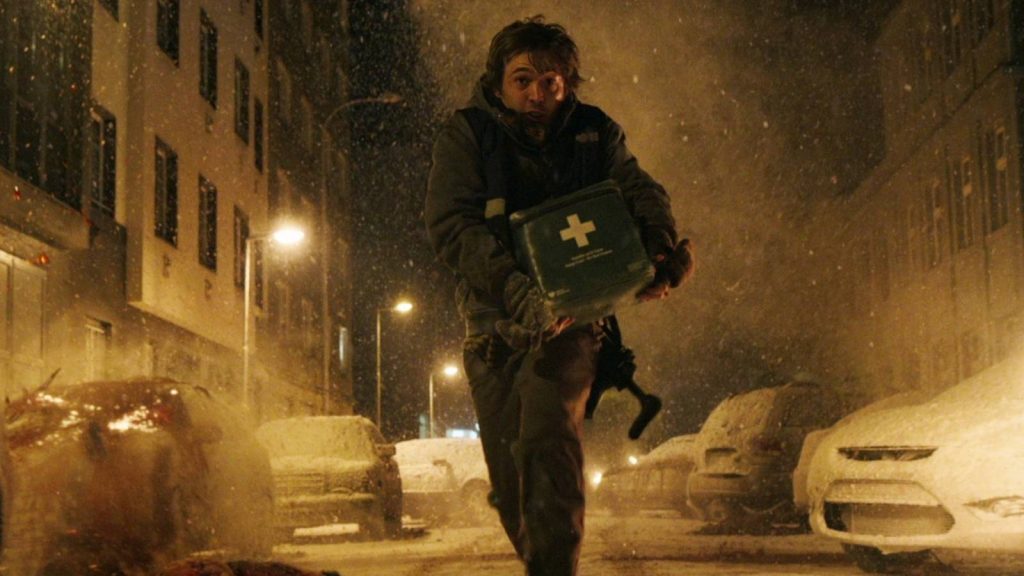
The film follows down-on-his-luck medical organ courier Bryan Hodukavich, an everyman of sorts, as he tries to survive the night while traipsing through the sanity-disintegrating streets of Raccoon City. As a zombie-like infection spreads, Bryan travels through the creepy countryside, the scary streets and, finally, the harrowing hospital wards of his final destination, meeting fellow survivors (for varying lengths of time) and learning more about the circumstances that have resulted in the freakish and disturbing sights festering around him.
Unlike the previous films in the franchise, this latest outing does not depict any of the main characters featured in the games. As director Zach Cregger stated in an interview, he considered those stories to have already been told and instead wanted to create a narrative that could have been occurring adjacent to the events seen in the Resident Evil 2 game. As such, the movie comes across more as a love letter to the series than a serious canon-driven entry. It takes the time to breathe and have fun in this insane, creepily infested world instead of trying to tell a tale while simultaneously setting up an endless number of sequels for money-making purposes.
With the pressure off, Cregger is free to focus on a single task—to entertain. Every scene and thrilling setup is maximised and explored to its full potential, taking its time to either build suspense, gross out the audience or deflate the situation with a wicked yet relatable sense of humour. With the camera commonly lurking over Bryan’s shoulder, introducing a claustrophobic feel, the vibe of the video games is evoked, as though viewers are playing through one scenario after another. This makes for excellent pacing, as there’s seemingly a new problem to solve every five minutes. Topped with recurring jokes, realistic learning curves with weaponry and a main character who’s hilariously not opposed to simply saying ‘nope’ when the going gets tough, it all culminates in making this horror film an extremely fun ride.
Austin Abrams plays the role of Bryan, and given that there is no scene where the character is absent, he has the difficult task of essentially carrying the film on his shoulders. He pulls it off, magnificently weaving between the comedic beats and the stillness of horror. Some of the supporting characters are more serious, while others reflect the goofy incompetence of the Umbrella Corporation, but no matter where they fall on the spectrum, Abrams manages to find cinematic chemistry with all of his castmates, even going so far as to build rapport with the audience as Bryan frequently becomes the story’s voice of reason.
Tonally perfect and paying homage to the franchise’s roots, what stops the film from becoming a top-tier outing is Cregger’s penchant for not knowing what to say. Like his previous projects, Barbarian and Weapons, which achieved critical acclaim for their refreshing characterisation and presentation, this film fails to produce a lasting message. While Bryan’s escapades through Raccoon City are riveting to watch, there is little to no inner conflict; his character shows personality, but viewers don’t get much of a chance to really know what makes him tick. There is a glimpse—Bryan makes multiple attempts to speak to his girlfriend, as it seems the couple are dealing with the prospect of an unwanted pregnancy. Eventually, there is a beautiful moment where Bryan sits and laments over the news, admitting his fear of change, but this conflict feels disconnected from the action. Even though Bryan must later walk through one of the most disturbing maternity wards committed to screen, his personal growth still seems lacking in this area.
As such, Cregger’s Resident Evil is wickedly fun and will no doubt please fans of the franchise (indeed, this is the best film by far, nostalgia aside). Yet outside of its goal of becoming an entertaining piece of media, it is shallow in thematic depth—not everyone will be expecting greatness from such a product, but there are nonetheless some missed opportunities for this narrative to mutate into something even stronger.
What should parents know?
Resident Evil is a horror film and therefore aims to terrify or otherwise creep out its audience. Strong body horror and gore are present, with corpses chopped, mangled and mutated into freakish entities. In nearly every setup, there’s gun violence, gruesome effects, plenty of blood and, understandably, lots of swearing. There is no moral boundary regarding who lives or dies—it doesn’t matter if they’re brave, old, young, a dog or even a newborn; if they’re infected, they’re fair game. There is also some discussion over whether a character should have an abortion.
REEL DIALOGUE: What are we actually afraid of?
When it comes to the topic of bravery, Bryan is an interesting character study. Given the unnerving and terror-inducing incidents he encounters very early on in the piece (before he even gets inside Raccoon City), it’s natural to ponder his motivation to proceed with completing his medical delivery. When he’s first given the job, it seems he accepts it purely for financial reasons. Later, he frequently cites the importance of the task, as though he is on a life-saving errand. When new things come to light, it shifts into self-preservation. Is this merely what he tells himself because he isn’t exactly presented with the option of turning back? Or is the whole adventure a way to procrastinate in facing his real fear—returning to his girlfriend and having a serious talk about the possibility of parenthood?
All things considered, Bryan’s character seems remarkably stagnant as he traverses a world that is literally evolving around him. Encountering one horrific entity after another, Bryan haphazardly faces them and keeps moving forward, but his sense of bravery feels overshadowed by his desire to avoid the troubles in his home life. He appears to want to maintain his relationship—trying to reach out, leaving messages and so on—but seems hesitant to commit to any real sort of change or responsibility.
Fear can produce inaction when responsibility requires engagement.
His situation evokes the themes seen in the Parable of the Talents in Matthew 25:14–30. In the parable, three servants are entrusted with money. Two of the servants are bold in how they treat their master’s property and manage to achieve a great return on investment. But the third servant does nothing of the sort, later confessing, “…I was afraid, and I went and hid your talent in the ground” (Matthew 25:25). His fear influences his inaction, preventing him from taking responsibility for what was entrusted to him.
All three servants faced the challenge of uncertainty. Only one refused to engage and was rebuked for it. Avoiding or running in fear from his circumstances works for most of the movie, but Bryan eventually realises that it’s not a permanent solution. Sometimes he encounters the same ‘problem’ just a little further down the road. While it’s amusing to see Bryan ‘nope’ out of some conflicts, it’s a considerably less useful strategy to utilise in real life.
Both the events in the film and the Parable of the Talents raise the question of whether fear is preventing us from faithfully engaging with the responsibilities placed before us.
Reel Dialogue has entered the world of YouVersion: Download the app, dive into the plans, and engage with the Bible in a fresh and exciting way. Reel Dialogue has entered the world of YouVersion: Download the app, dive into the plans, and engage.