Glenrothan
A Scottish retelling of the prodigal son


 2 Jul 2026
  Russ Matthews
 Brian Cox has spent decades portraying some of cinema and television's most formidable figures, so it seems fitting that his directorial debut would turn its attention to something quieter and far more personal. Glenrothan leaves behind the boardrooms and battlefields to tell a story of family, forgiveness and homecoming, proving that some of life's greatest dramas are found not in extraordinary circumstances, but in the relationships that have shaped us for a lifetime.
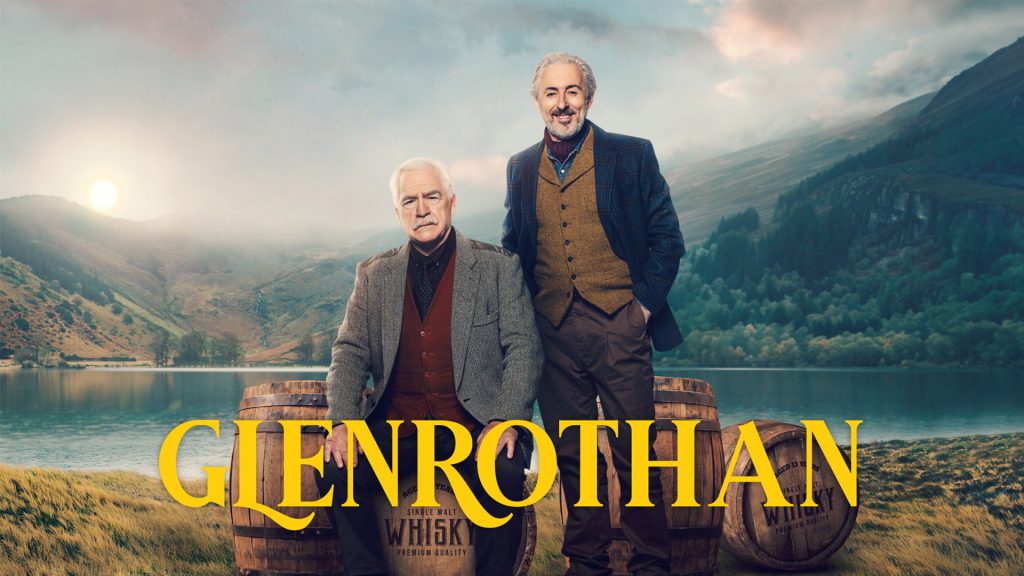
After 40 years living in Chicago, Donal (Alan Cumming) reluctantly returns to the Scottish Highlands to reconcile with his estranged older brother Sandy (Brian Cox). Faced with the uncertain future of the family’s whisky distillery, the brothers must confront decades of unresolved hurt, family expectations and the choices that drove them apart. Set against the breathtaking Scottish landscape, Glenrothan becomes less a story about whisky than one about legacy, belonging and whether it is ever too late to come home.
Brian Cox’s directorial debut proves to be a narratively simple story that bears more than a passing resemblance to the biblical account of the prodigal son. Alan Cumming carries the film with quiet confidence as Donal, a man returning home after years away, forced to confront his past, his family and the life he left behind.
The emotional heartbeat of Glenrothan lies not only in the fractured family relationships, but in its musical performances. Cumming shares several moving moments alongside a range of musicians and his on-screen daughter, Amy (Alexandra Shipp), allowing the songs to communicate emotions that the screenplay often struggles to express. Combined with the beauty and majesty of the Scottish Highlands, these sequences provide much of the film’s warmth and charm.
Unfortunately, the story itself rarely reaches the heights suggested by its setting. Brian Cox appears to draw heavily on his years working in television, with the narrative unfolding more like a series of connected episodes than a cinematic journey. While the performances remain committed throughout, the screenplay follows a predictable path that offers few surprises along the way.
Cumming and Shirley Henderson, as Jess, do everything they can with the material they have been given, bringing authenticity and vulnerability to their characters. Yet despite the stunning Scottish landscapes and heartfelt musical interludes, Glenrothan never quite finds the emotional depth needed to leave a lasting impression. It is an earnest family drama that is pleasant enough to watch, but ultimately proves to be a forgettable experience.
REEL DIALOGUE: Is it ever too late to come home?
One of the reasons Glenrothan feels so familiar is that its central story echoes one of Jesus’ most well-known parables.
In Luke 15, Jesus tells the story of a younger son who demands his inheritance, leaves home and wastes everything on reckless living. Broken and ashamed, he decides to return, expecting only to become one of his father’s servants. Instead, he is met with compassion. Before he can finish his apology, his father runs to embrace him, restores him to the family and celebrates his return.
The story is about far more than a rebellious son. It reveals the heart of God.
Many people carry regrets about the choices they have made or the relationships they have damaged. Like the younger son, they wonder if they have gone too far to ever come home again. Jesus’ answer is one of extraordinary grace. God delights in welcoming home those who turn back to him, no matter how far they have wandered.
Yet the parable also challenges those who have remained faithful. The older brother’s resentment reminds us that forgiveness can sometimes be just as difficult to receive as it is to offer.
Whether viewed through the lens of Glenrothan or the pages of Scripture, the invitation remains the same. It is never too late to come home.
Where to look for more details: Luke 15:11–32; Romans 5:8; Ephesians 2:8–9; 2 Corinthians 5:17

Reel Dialogue has entered the world of YouVersion: Download the app, dive into the plans, and engage with the Bible in a fresh and exciting way.
Reel Dialogue has entered the world of YouVersion: Download the app, dive into the plans, and engage.


