The Dog Stars
Few dogs in this starry tale, but discovering the element of choice in humanity


 27 Aug 2026
  Juliana Purnell
 After almost a decade helming mostly biographical or historical pieces, director Ridley Scott makes a long-awaited return to the science fiction genre with The Dog Stars. Adapted from Peter Heller’s book of the same name, the film explores a world that has been devastated by a pandemic, which was a much more fanciful scenario when it was published back in 2012. It’s clear that time has not been kind to this type of story, as it not only struggles to be taken seriously, but also to offer anything new to the conversation.
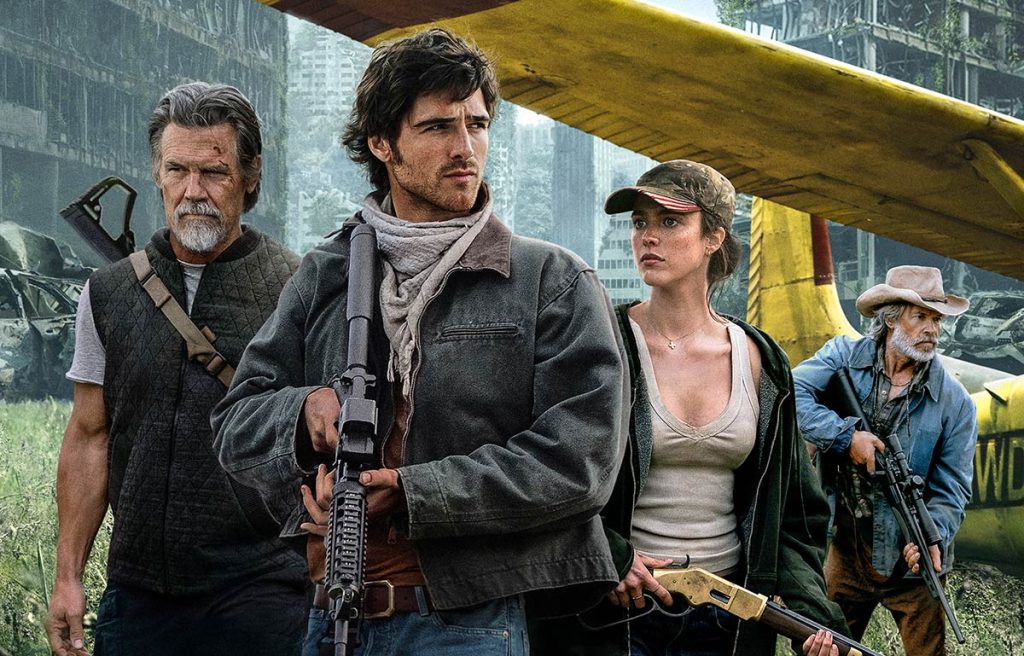
The movie is set a few years after a deadly flu has wiped out most of humanity. It follows the journey of Hig (Jacob Elordi)—a mechanic and pilot who is still grieving the loss of his wife. Engaging with strangers in this post-apocalyptic world always comes with risk, either through illness or violence, which has caused Hig’s ally, Bangley (Josh Brolin), to take a ‘shoot first, ask questions later’ approach to defending their isolated Colorado home alongside a landing strip. Yet despite his friend’s cynicism, Hig continues to reach out to small communities, flying his vintage Cessna to deliver supplies as a way to find meaning in an existence that’s beginning to feel hopeless. When tragedy causes Hig to lose his final connection to his past, he decides to undertake a treacherous journey to satiate his curiosity as to whether there truly is a better life on offer out there, past the plane’s point of no return. Romance and danger ensue.
The narrative is structured much like a road trip, where the protagonist encounters various characters and problems on the way to their destination, with the journey unearthing a latent appreciation of what was left behind. As such, the pacing of the storytelling can feel uneven in parts, as each location conjures a different vibe. A small house in the suburbs haunts Hig with his stolen future; the airstrip offers a home with Bangley, though it is desolate; an isolated farm gently presents a potential romance; all while there are pockets of society that display the worst of humanity.
Yet despite the plot’s potential to swing wildly between romcom and horror, Scott refuses to lean heavily on any genre, creating a tonally lukewarm production. Lacking a strong commitment to any particular direction, it leaves the movie bereft of anything distinctive. In short, fans of The Walking Dead or any other post-apocalyptic survival drama will be able to predict every turn in this overly familiar story.
From a technical standpoint, the film is beautiful on the big screen. Shots of the lone Cessna flying through the Colorado mountains bring about a mixture of awe, hope, loneliness and grief as the film taps into the wonderment of expedition. The movie is at its best in its quiet moments of reflection, although Bangley and ‘Pops’ (Guy Pearce) keep the momentum alive in their respective supporting roles. Yet due to its piecemeal approach to storytelling, there is no consistent villain, only vague threats of invaders. When they do make an appearance and mercifully ramp up the stakes in an otherwise languid tale, they feel comically clichéd, fulfilling nearly every ‘wild, feral survivalist’ trope in this genre imaginable.
Ultimately, The Dog Stars raises some standard questions regarding the quest for safety and contentment in a life that has been shattered, amongst a mediocre plot that has been done before (and better).
What parents should know?
At its core, The Dog Stars is a bleak film where most characters are forced to confront whether there is any point in continuing with life. When people aren’t attacking each other over resources, they are lamenting the past and the dead, sometimes verbalising suicidal ideas. The deaths depicted are brutal, not flinching away from gun violence, decapitation and bloodshed, with a moderate level of gore involved. Despite the title, there is also a disappointing lack of dogs.
REEL DIALOGUE: The element of choice in humanity
Heller’s original novel always intended to evoke parallels with Noah’s Ark. While screenwriter Mark L. Smith has introduced more conflict compared with what is present in the book, those thematic bones are still present. In the aftermath of a global cataclysmic event, Hig unwittingly searches for signs of life, grieving the past but hoping there is still a better future amongst a rebuilt society. But what kind of humanity gets to survive?
It soon becomes clear there is a difference between surviving and living.
There are many different groups within the film, all with a different view on life: Hig, Bangley, Cima and Pops, the ‘Roaches’, the residents of Grand Junction and the Mennonite families. All of them are survivors, but not all of them have retained their humanity. In a fallen world, it seems compassion and human connection are a choice.
The film’s messaging boldly questions whether there is any value to life if we lose our humanity in the process, which echoes the sentiment presented in Matthew 16:25–26.
Arguably, the most recognisable survival tactic in this broken society belongs to Bangley. Self-sufficient and sitting upon a hoard of renewable resources, he has the luxury of not needing to rely on anyone else. As he ponders to Hig, what more could a person want? Is this as good as it gets? Yet there is an emptiness that gnaws at Hig which eventually incites him to leave; a desire that cannot be scratched by the mere safety of convenience.
When Jesus commands us to ‘love your neighbour as yourself’ (Matthew 22:39), it proposes a striking contrast to the self-serving morals adopted by many in this broken society. Yet it is telling that Hig and the other peaceful and open people he gathers naturally gravitate towards the one community that best replicates the teachings of Christ. In a world where survivors can rebuild society in the way they want, it seems the one that offers the most hope, joy, value and a meaningful existence is the community that fosters a deep love for one another. Even Bangley cannot escape the welcoming warmth of a servant-hearted culture.
Life is not just about surviving, but rather investing in others and building a community worth loving.

Reel Dialogue has entered the world of YouVersion: Download the app, dive into the plans, and engage with the Bible in a fresh and exciting way.
Reel Dialogue has entered the world of YouVersion: Download the app, dive into the plans, and engage.